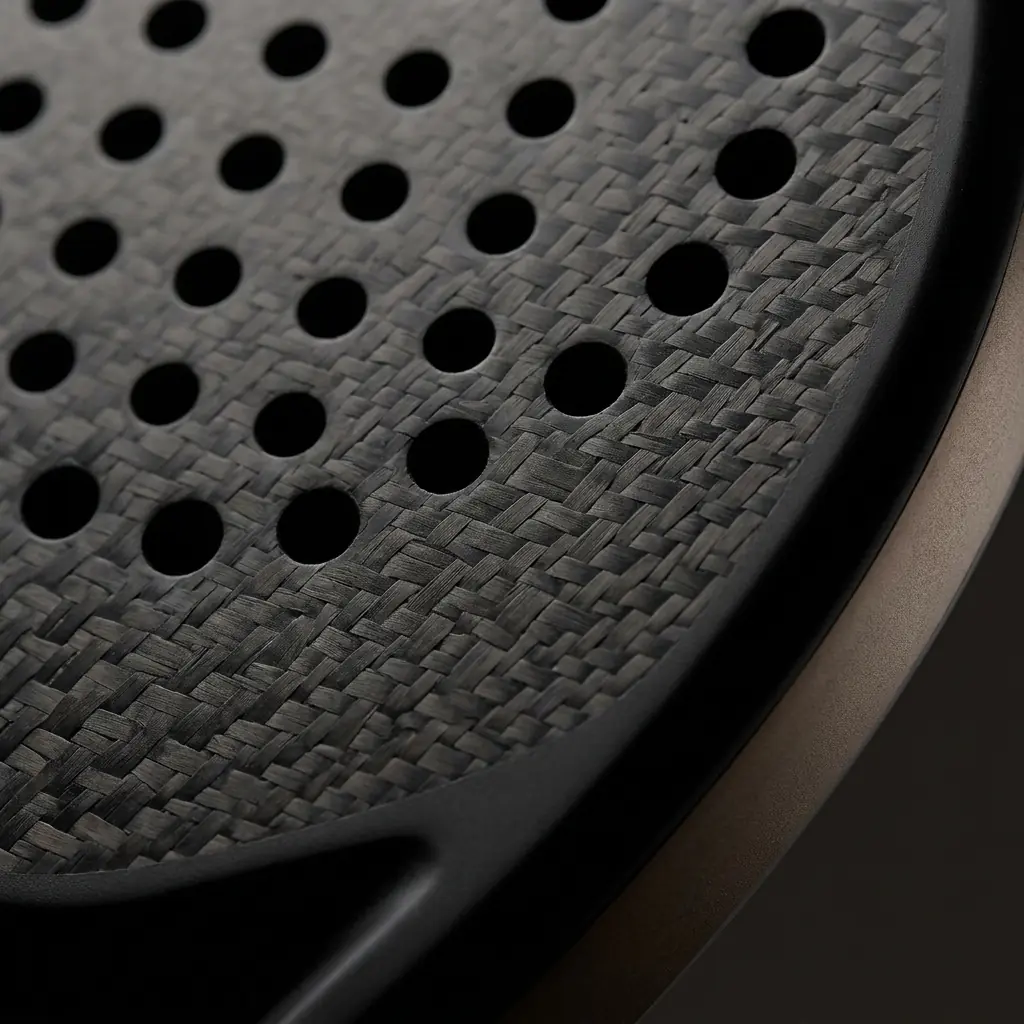
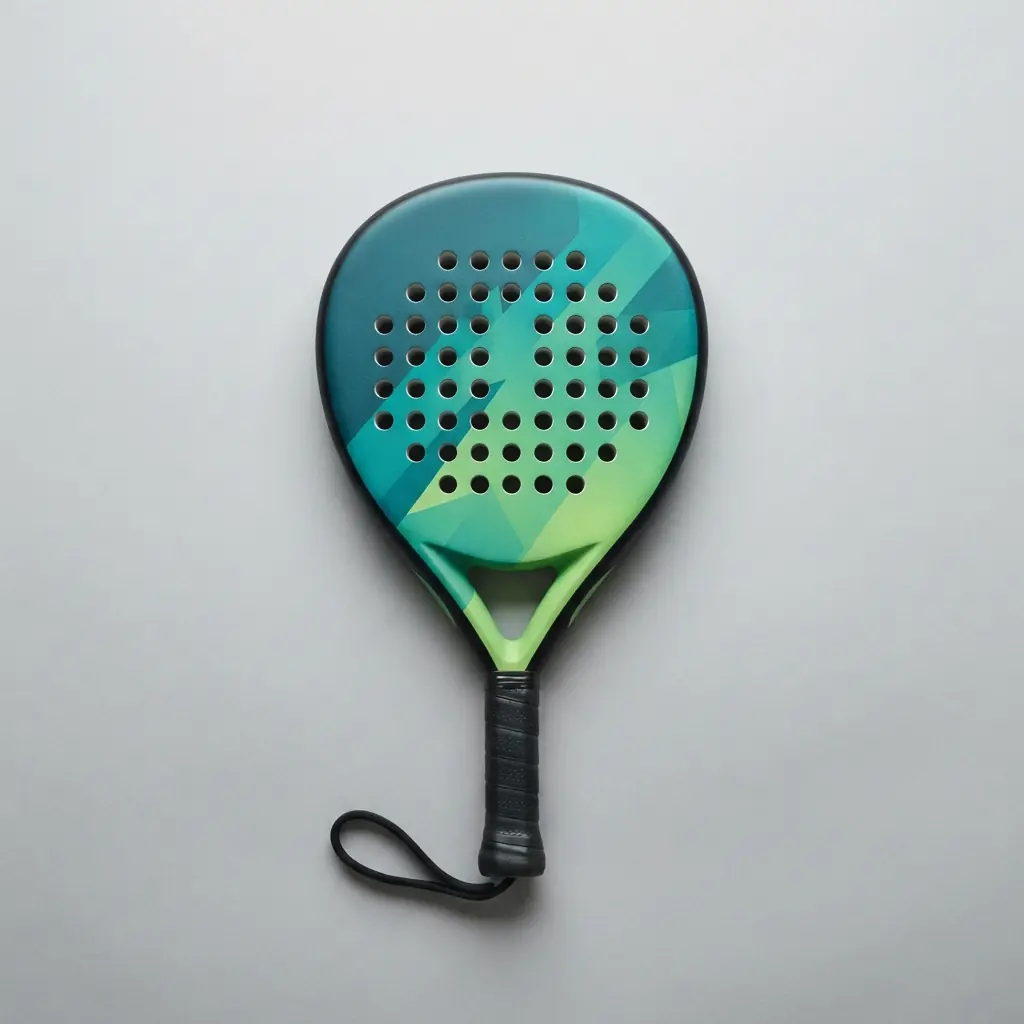
A pickleball paddle and a padel racket look similar enough in photos that people assume the equipment is basically interchangeable. It isn't. The weight, internal construction and face material are all genuinely different, and almost all of it traces back to one root cause: the ball each sport is built around.
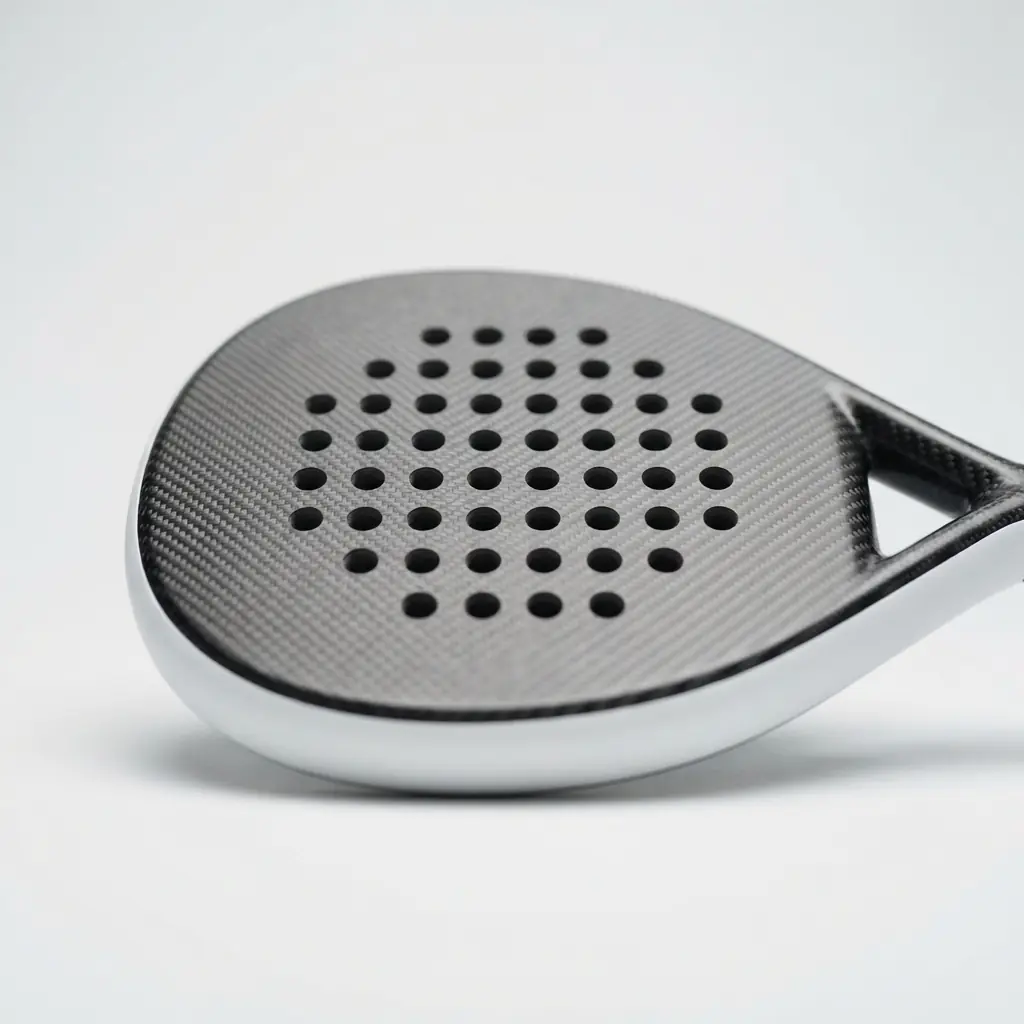
HEAVIER, PERFORATED
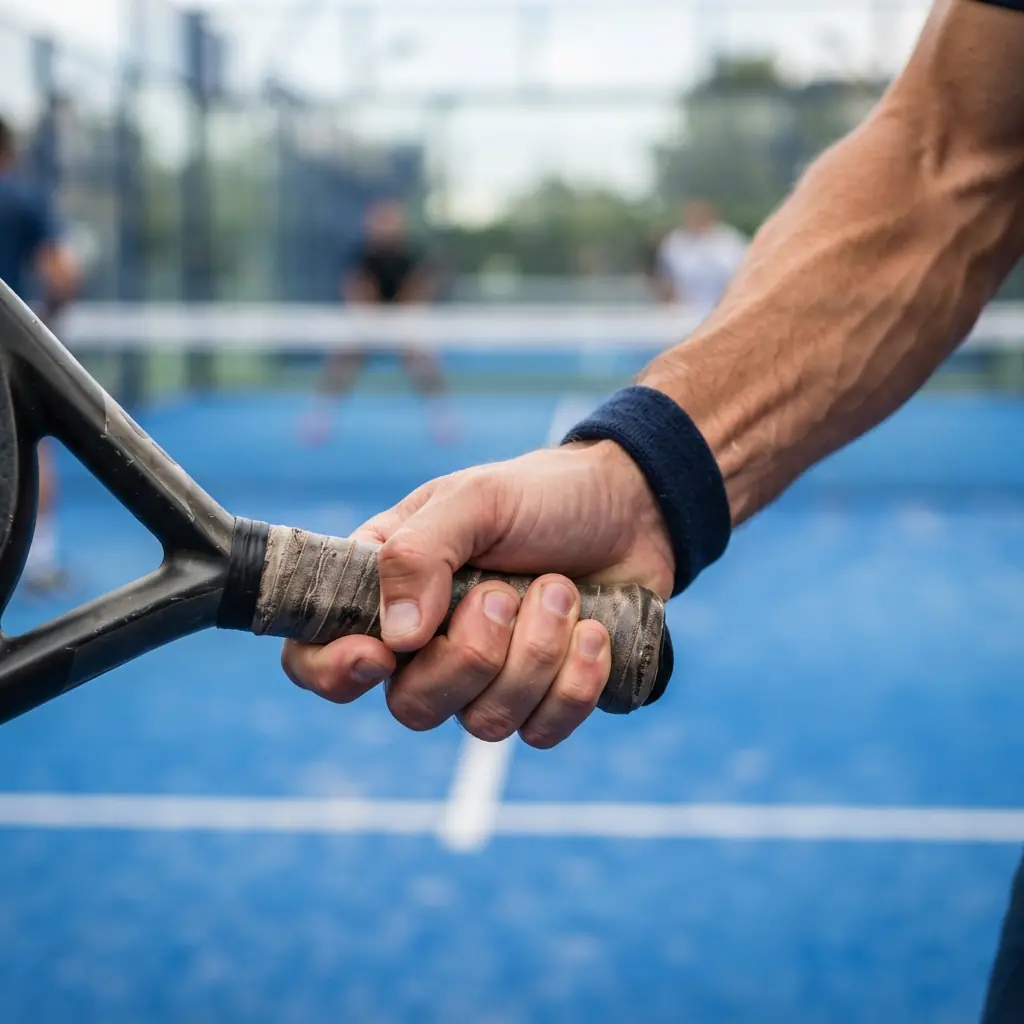
LIGHTER, SOLID FACE
Weight: A Bigger Gap Than It Looks
This is the difference that surprises people most. Padel rackets typically weigh 350–385g. Pickleball paddles typically sit in a 210–235g midweight range — see our pickleball paddle weight guide for the full breakdown. That means a padel racket commonly weighs 50–80% more than a pickleball paddle, despite the two looking like similarly sized solid-faced rackets in a photo.
Core Material & Why Padel Rackets Have Holes
Padel rackets use a foam core — softer EVA foam on control-oriented rackets, denser foam on power-oriented ones, as covered in our padel racket shapes guide. Pickleball paddles use a polymer honeycomb core instead, a genuinely different cellular structure, not just a different name for the same material. Padel rackets are also perforated with a pattern of holes across the face — but that's purely a weight-reduction measure, not a ball-interaction feature. Pickleball paddles have no holes at all; their face is fully solid.
The holes in a padel racket have nothing to do with the ball — they're there purely to shave weight off a racket that would otherwise be even heavier than it already is.
Face Material: The Same Tradeoff, Different Sport
This is the one place the two sports' equipment genuinely converges. Both padel rackets and pickleball paddles use the same carbon-fiber-vs-fiberglass tradeoff on the face: carbon is stiffer and favors control and direct energy transfer, fiberglass flexes more and favors power and forgiveness. Our carbon fiber vs fiberglass explainer, written primarily for pickleball paddles, describes the same underlying physics that applies directly to padel racket faces.
Why the Ball Dictates the Rest of the Equipment
None of these differences are arbitrary — they trace back to the ball. A padel ball is pressurized and similar in size to a tennis ball, just at lower pressure, which demands a heavier, more substantial racket to generate real pace against it. A pickleball is a light, hard, perforated plastic ball, closer to a wiffle ball, which is exactly why pickleball paddles can stay lighter without sacrificing power. Build a padel-weight racket for a pickleball, or a pickleball-weight paddle for padel, and the equipment would badly mismatch the ball it's hitting.
If you're picking a first racket or paddle in either sport, start forgiving rather than powerful — that principle holds on both sides of this comparison.
Babolat Contact Padel Racket
~$59Round shape, soft core, huge forgiving sweet spot — the padel-side equivalent of a forgiving first paddle
Side-by-Side Spec Comparison
| Spec | Padel Racket | Pickleball Paddle |
|---|---|---|
| Typical weight | 350–385g | ~210–235g (midweight) |
| Core material | EVA or denser foam | Polymer honeycomb |
| Face holes | Yes, for weight reduction | No, solid face |
| Strings | None (solid) | None (solid) |
| Common face materials | Carbon fiber or fiberglass | Carbon fiber or fiberglass |
| Shape system | Round, teardrop, diamond | Standard, elongated, hybrid |
Figures reflect typical published specifications and vary by individual model — see our dedicated padel and pickleball buying guides for specific product recommendations.
For the sports themselves rather than just the equipment, see our padel vs tennis comparison and pickleball vs padel comparison. For gear recommendations, our padel rackets guide and pickleball paddles guide cover real products across every price point.