Pickleball's rules are simple enough to learn in five minutes and specific enough to trip up players who've been on the court for months. This is a plain-language walkthrough of the rules that actually come up in a normal game, based on the official USA Pickleball rulebook.
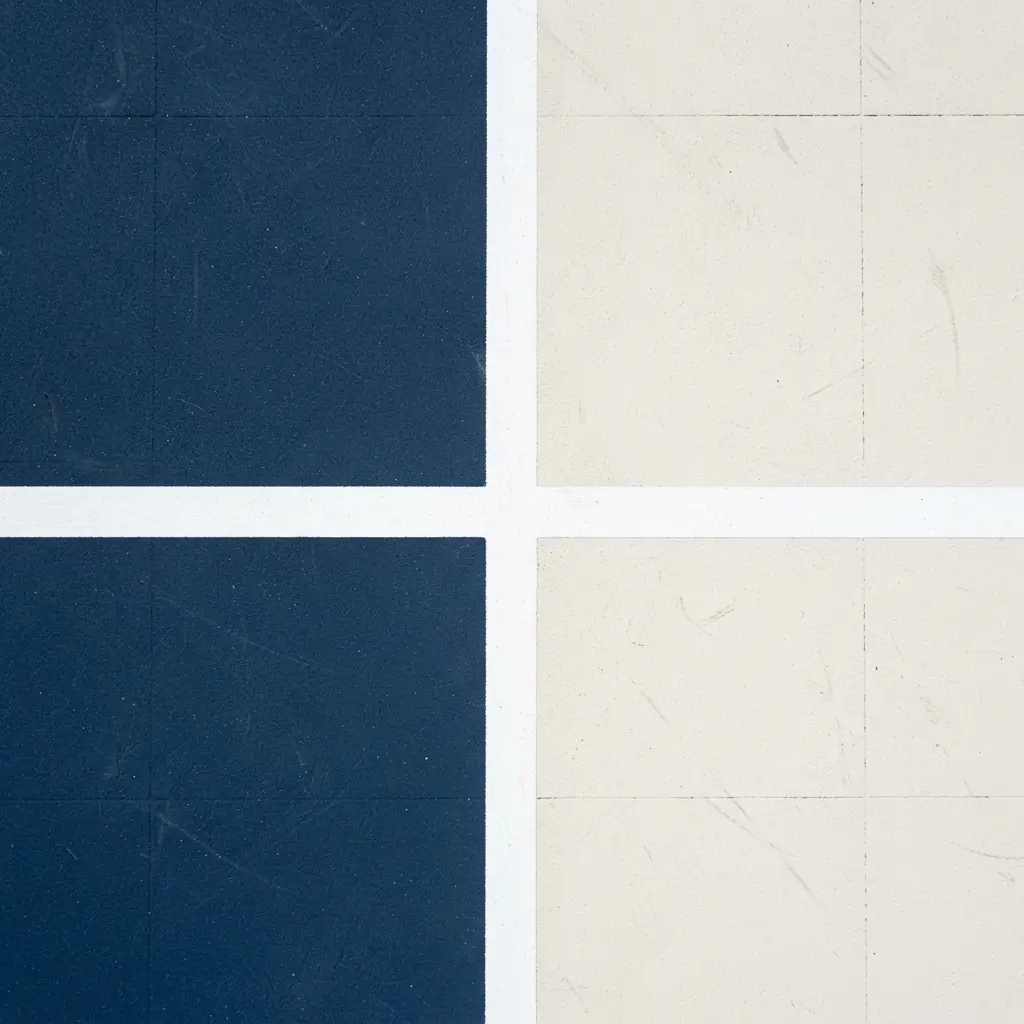
NON-VOLLEY ZONE
SERVICE BOUNDARIES
Court & Net Basics
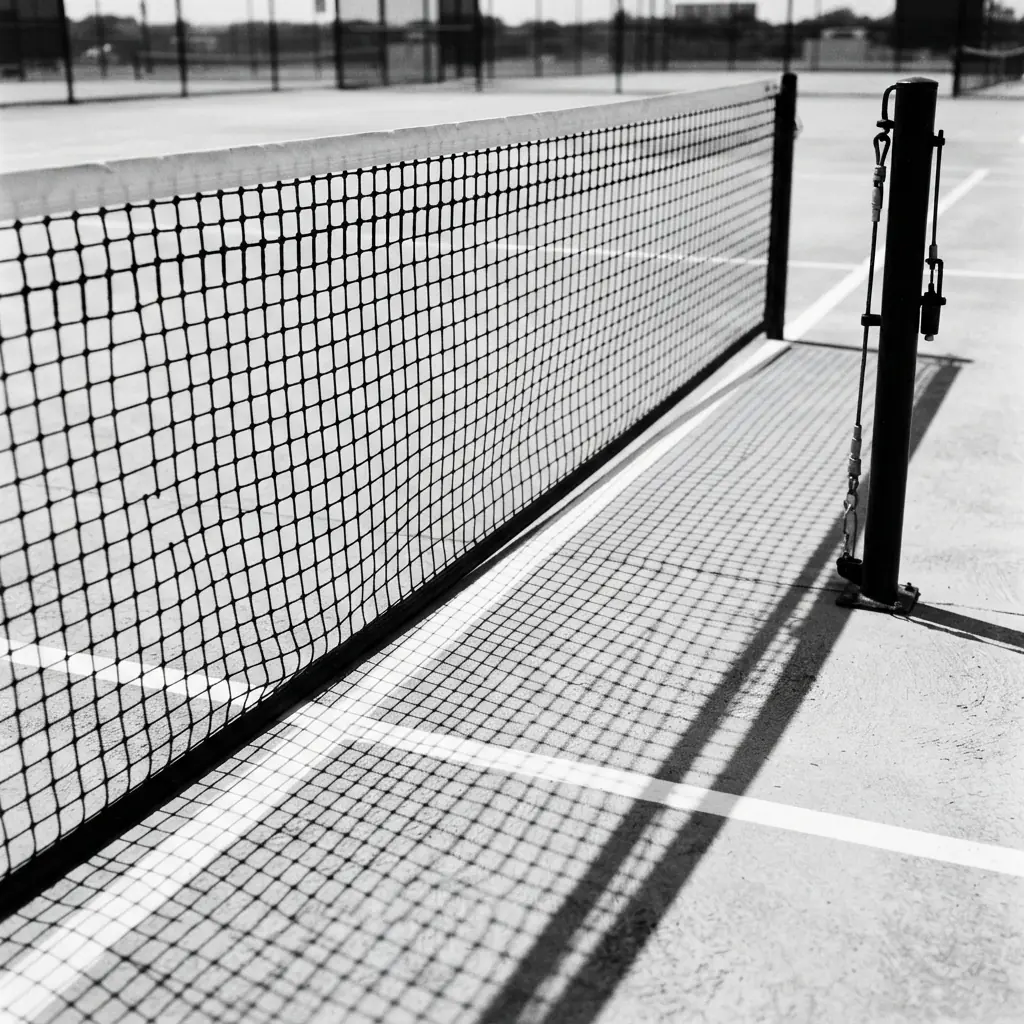
A regulation pickleball court is 20 feet wide by 44 feet long — the same dimensions for both singles and doubles. The net stands 36 inches high at the sidelines and dips to 34 inches at the center, pulled down by a center strap. Each side has two service courts, 10 feet by 15 feet, split by a centerline.
The Non-Volley Zone (Kitchen)
The non-volley zone — universally called "the kitchen" — extends 7 feet from the net on each side of the court. Inside that zone, you cannot hit the ball out of the air (a volley); the ball must bounce first. It's a fault if any part of you, your paddle, or anything you're wearing touches the non-volley zone or its lines while volleying, including if your own momentum carries you in after contact. You're allowed to stand in the kitchen and let a ball bounce there — the restriction is specifically on volleying while any part of you is touching the zone.
The Double-Bounce Rule
After the serve, the receiving side must let the ball bounce once before returning it. The serving side must then also let that return bounce once before hitting it back. Only after both of those bounces have happened can either side volley the ball out of the air. This is what gives pickleball its slower, more tactical opening to each point compared to a sport like tennis, and it's the rule most new players forget in their first few games.
The two-bounce rule is what separates pickleball's opening exchange from tennis — everyone has to let it bounce twice before the volleys start.
Serving Rules
The serve must be hit underhand, struck from behind the baseline, and must clearly contact the ball below the waist with the paddle head clearly below the wrist at contact, using a clearly upward arc. The ball must land in the diagonal service box beyond the non-volley zone on the receiving side. You get one attempt — unlike tennis, there's no let: if the serve clips the net and still lands in the correct service box, it's a live, valid serve.
Scoring
Only the serving side can score a point. If the receiving side wins a rally, they don't score — they simply earn the right to serve. Games are typically played to 11 points, win by 2. In doubles, each side normally gets two serves per rotation (one per partner) before the serve passes to the other team, with one exception: at the very start of the game, the first serving side only gets one serve before it switches over. Doubles scores are called with three numbers — for example, "seven, five, two" means the serving team has 7 points, the receiving team has 5, and the second server on the serving team is currently up.
What Changed for 2026
The core mechanics of the serve didn't change for 2026, but USA Pickleball tightened enforcement by adding the word "clearly" to all three serve requirements: contact clearly below the waist, paddle head clearly below the wrist, and a clearly upward arc. In prior seasons, referees were instructed to give servers the benefit of the doubt on a borderline call. That presumption is gone — if a serve doesn't clearly meet all three requirements, it's now a fault, not a judgment call in the server's favor.
If you're prepping for your first sanctioned tournament, it's also worth double-checking your paddle's USA Pickleball approval status directly — approved-equipment lists are updated and can change model to model, even within the same product line. Our Selkirk Vanguard Power Air Invikta review and 2026 paddle comparison both note current approval status for the paddles covered.
Common Faults Beyond the Basics
Past the non-volley zone, double-bounce, and serve rules above, a handful of other faults come up regularly in casual and league play. A ball is out if it lands outside the court lines, including the baseline and sidelines — lines themselves are considered "in," the same convention used in tennis. Hitting the ball before it crosses to your side (reaching over the net), carrying or double-hitting the ball on a single stroke, and the ball touching a player or anything they're wearing before landing are all standard faults across most racket sports and apply here too. If the serve doesn't land in the correct diagonal service box beyond the kitchen, that's also a fault on the server, ending the point immediately since there's no second-serve rule in pickleball the way there is in tennis.
Where to Put This Into Practice
Rules only matter once you're on a court. See our courts & technique hub to find somewhere to play and read technique breakdowns — including the third shot drop and dinking strategy, both of which exist specifically because of the double-bounce and non-volley-zone rules covered here.
Frequently Asked Questions
What size is a pickleball court?
A regulation pickleball court is 20 feet wide by 44 feet long, the same dimensions for both singles and doubles. The net stands 36 inches high at the sidelines and dips to 34 inches at the center.
What is the kitchen in pickleball?
The kitchen is the non-volley zone, extending 7 feet from the net on each side of the court. You cannot hit the ball out of the air while any part of you, your paddle, or your clothing is touching that zone — the ball must bounce first.
What is the double-bounce rule?
After the serve, the receiving side must let the ball bounce once before returning it, and the serving side must let that return bounce once before hitting it back. Only after both bounces can either side volley the ball out of the air.
How is pickleball scored?
Only the serving side can score a point. Games are typically played to 11, win by 2. In doubles, each side normally gets two serves per rotation (one per partner) before the serve passes to the other team, except at the very start of the game.
What changed in the pickleball rules for 2026?
USA Pickleball added the word “clearly” to all three serve requirements — contact clearly below the waist, paddle head clearly below the wrist, and a clearly upward arc — removing the previous benefit-of-the-doubt on borderline serve calls.