Most beginners overspend on the wrong gear first — a premium paddle bought before they've hit a hundred balls, or a pair of running shoes already sitting in the closet. Neither purchase serves a new player well. Pickleball's low barrier to entry is part of its appeal; you don't need a garage full of specialty equipment to show up and play a decent game. This guide covers what actually matters at the beginning, in the order it matters, based on published specs and commonly repeated coaching advice rather than an exhaustive personal test of every option. If you'd rather buy a paddle and balls together in one purchase instead of piecing it together item by item, our paddle & ball starter sets guide covers the real bundled options.
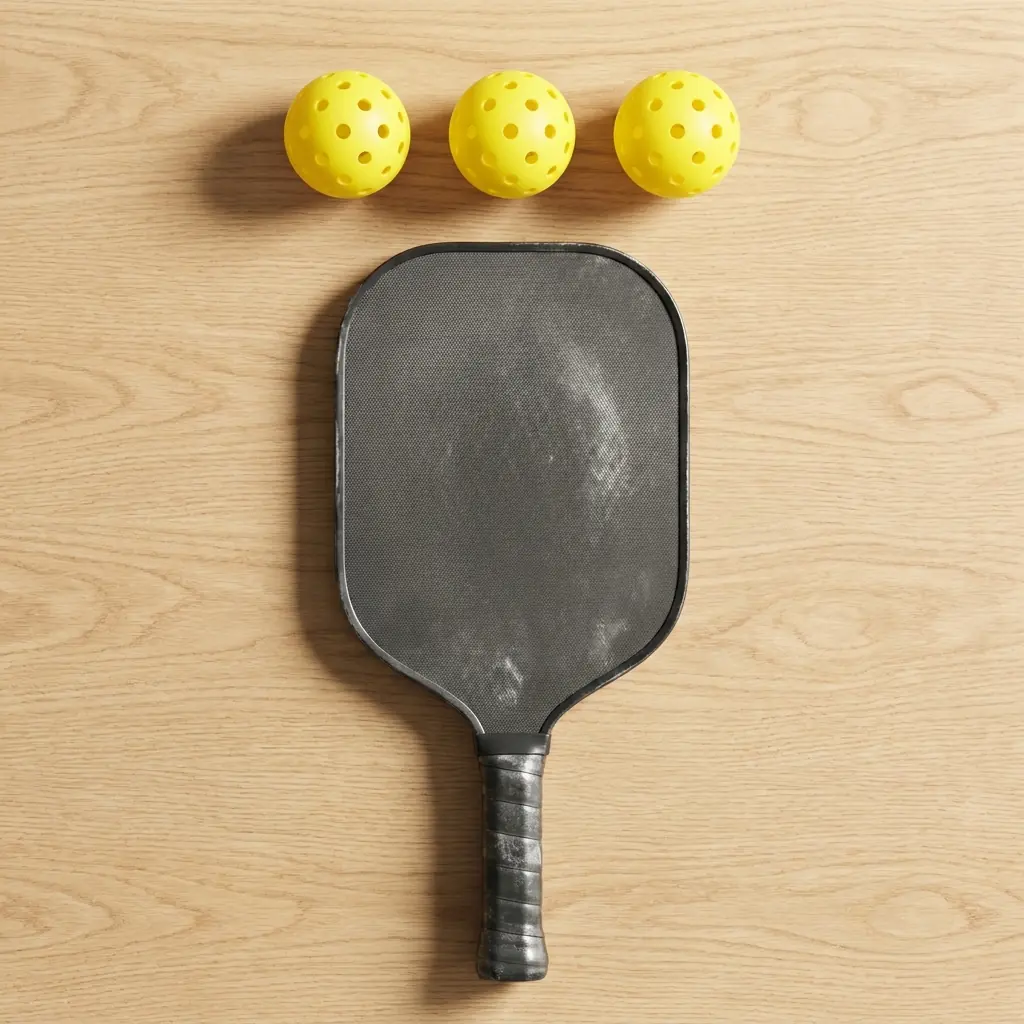
PADDLE & BALLS
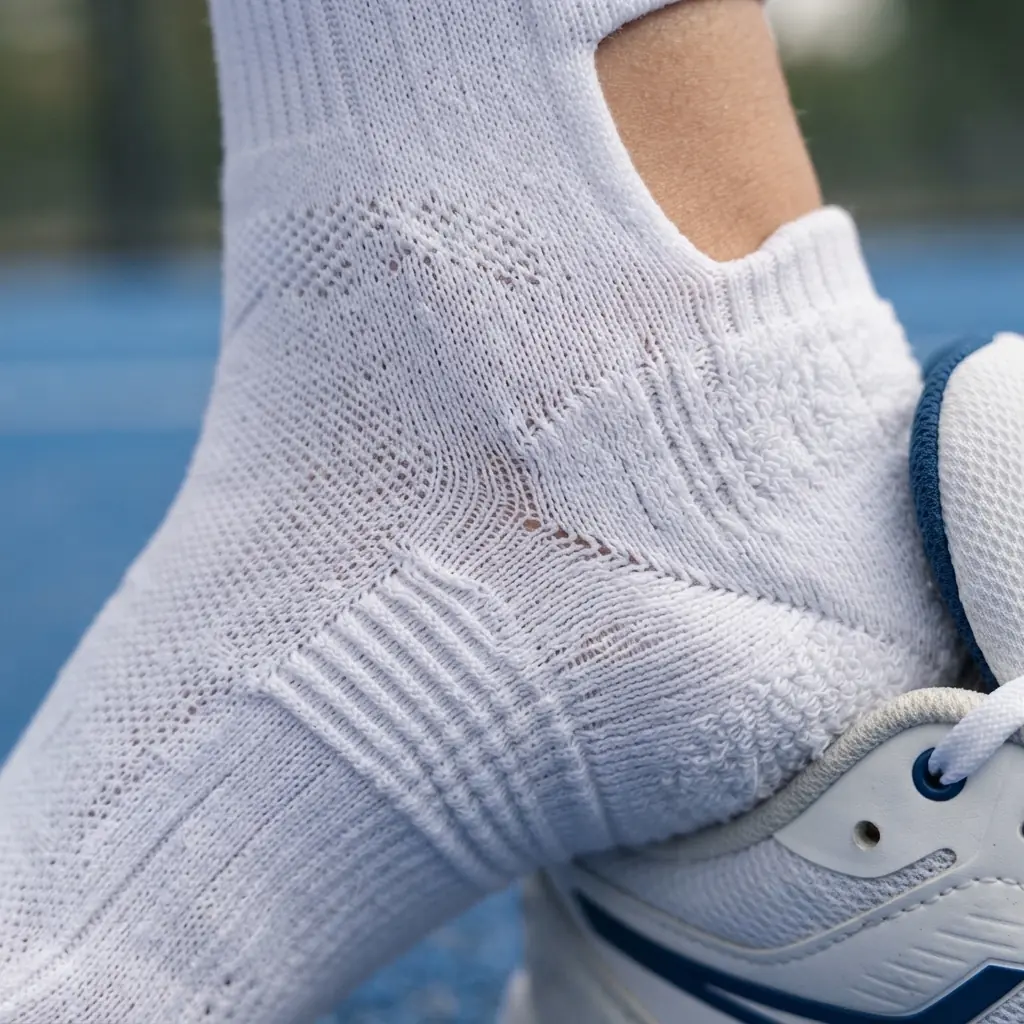
COURT-READY SUPPORT
The Paddle — Your One Non-Negotiable Purchase
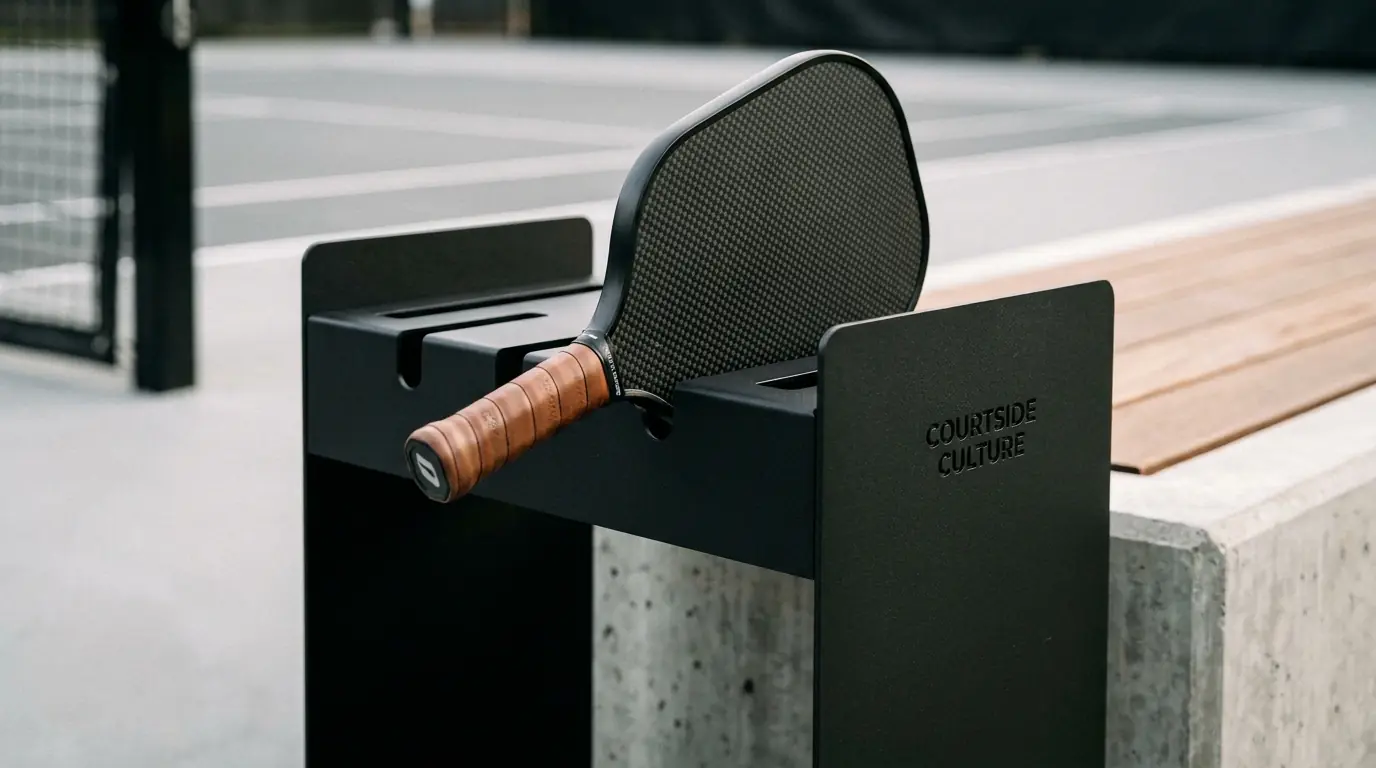
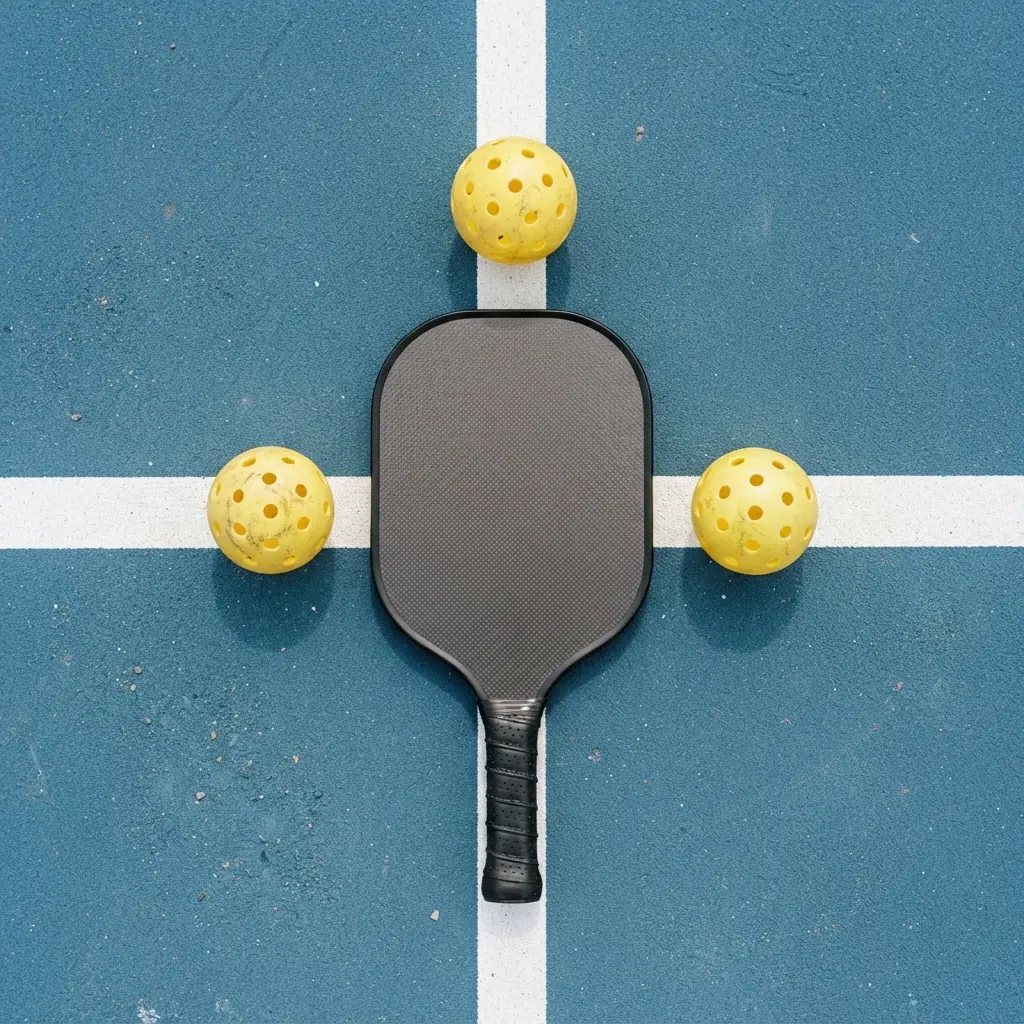
The paddle is the one piece of equipment worth real thought before your first game. As a beginner, forgiveness generally matters more than power — a larger sweet spot matters more than the extra pace a premium carbon paddle offers, because a new swing isn't yet consistent enough to reliably exploit that pace. USA Pickleball–approved fiberglass paddles are a sensible starting point: fiberglass's flex is generally more forgiving on off-center hits, and approved status means you're not locked out if you decide to try a sanctioned event later.
ProLite Rebel PowerSpin 2.0
$110–160Reactive fiberglass face, forgiving sweet spot, USA Pickleball approved
Footwear — Why Running Shoes Are the Wrong Choice
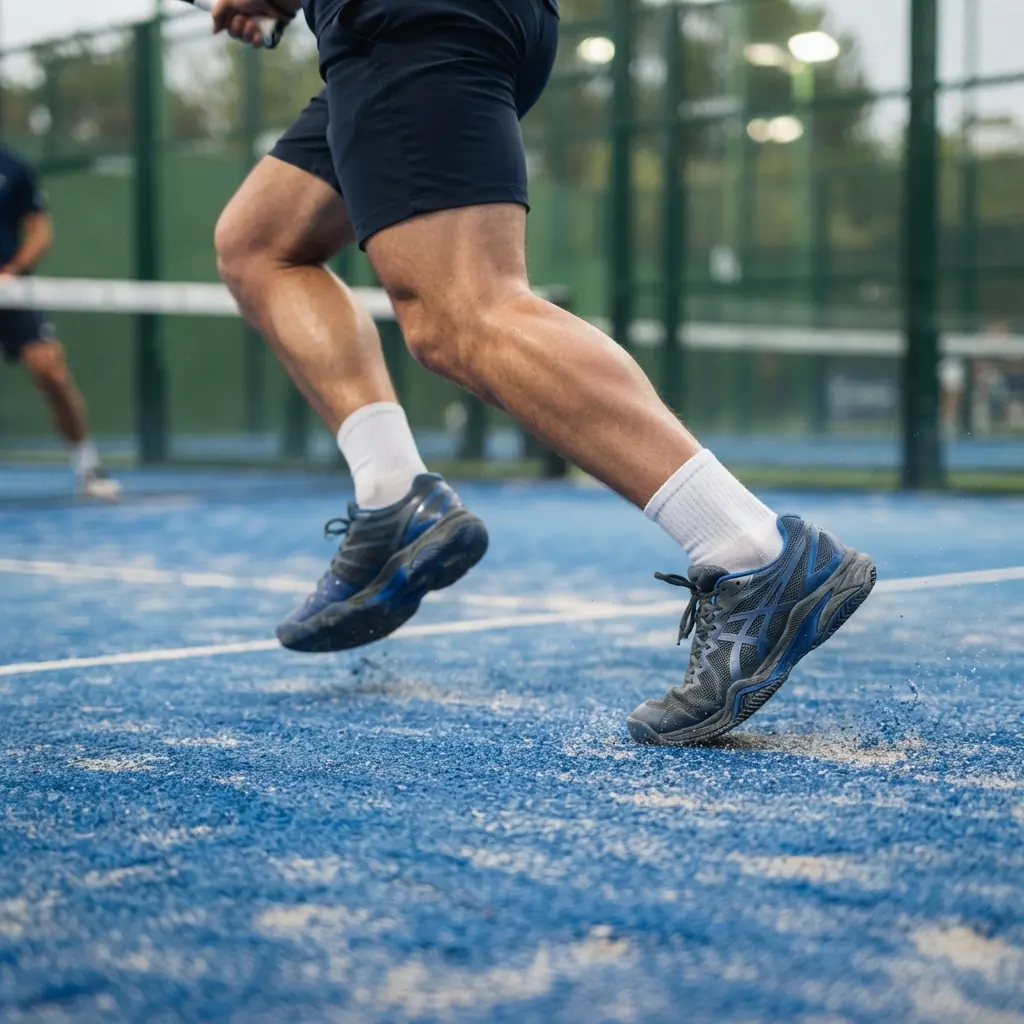
Running shoes are built for one direction: forward. Their heel-to-toe rocker sole is designed to roll your foot through a forward stride, which is the wrong geometry for a sport built around sudden lateral cuts, split-steps and quick direction changes. That rocker shape is generally understood to increase ankle-roll risk when you plant hard to change direction — a common way new players get hurt in their first few months. Court shoes address this with a flatter, more stable sole platform, reinforced lateral support, and a non-marking sole that's required at most indoor and many outdoor facilities.
K-Swiss Hypercourt Express 2
$95–120Court shoe with lateral support and a non-marking outsole
Balls — Indoor vs Outdoor
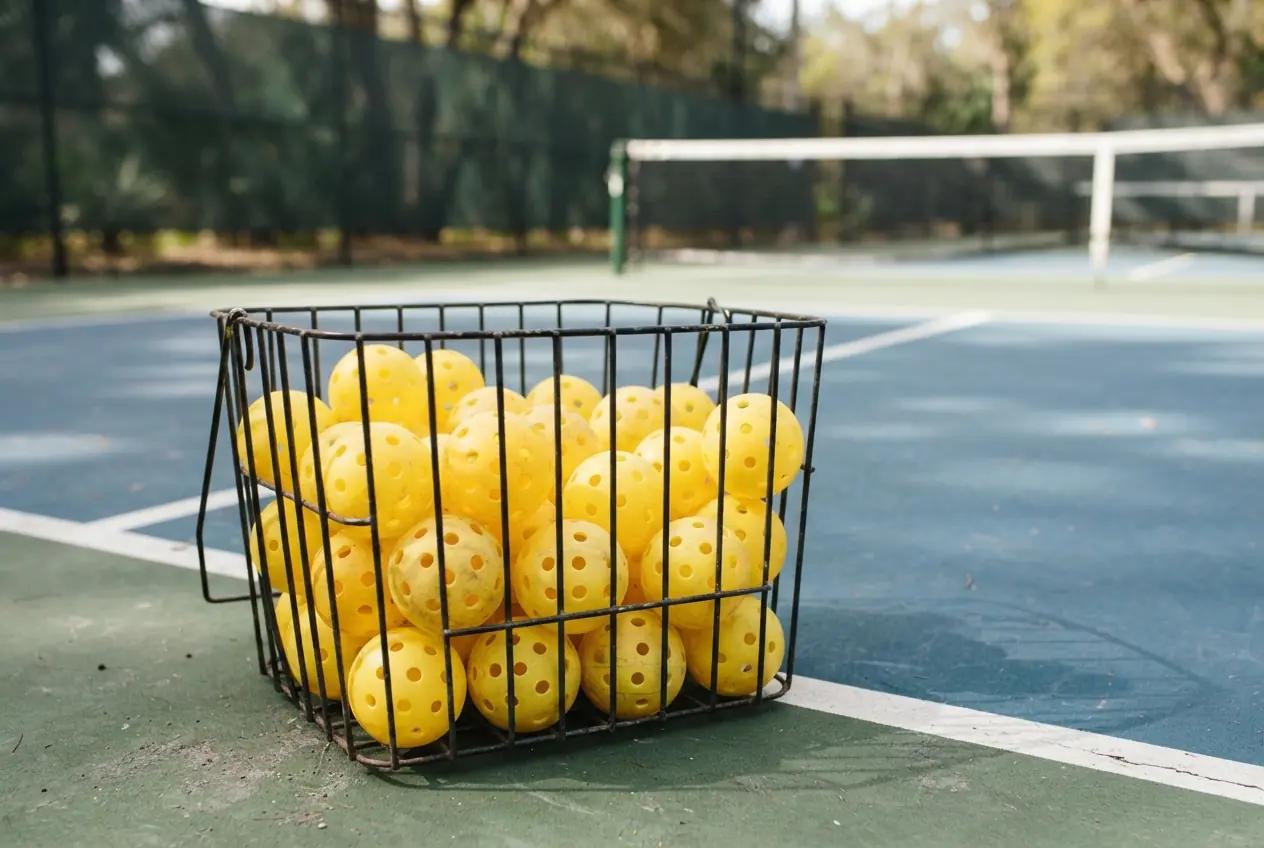
Indoor and outdoor pickleballs are not interchangeable, and using the wrong type changes how the ball bounces and spins in ways that will confuse an early practice session. Outdoor balls generally have more, smaller holes and a harder plastic construction to resist wind and hold up on rougher asphalt or concrete. Indoor balls generally have fewer, larger holes and a softer construction suited to smooth gymnasium floors. Play outdoor balls indoors and they tend to feel dead and low-bouncing; play indoor balls outdoors and they tend to crack or deform faster in wind and on rough pavement.
Franklin X-40 Outdoor Balls
~$12–2040-hole outdoor pattern, official ball of the US Open
The Accessories That Actually Matter
Beyond the paddle, shoes and balls, two accessories are genuinely worth adding early. A basic paddle bag keeps gear organized for the walk from the car to the court and protects the paddle edge from dings in transit. And if you're playing outdoors, polarized eyewear cuts glare enough to actually track the ball against a bright sky — something new players consistently underestimate until they lose a rally to the sun. Most other accessories — paddle cases, training rebounders, compression sleeves — can wait until you know you're sticking with the sport.
Your Complete Starter Kit at a Glance
| Item | Why You Need It | A Reasonable Pick | Typical Price |
|---|---|---|---|
| Paddle | Forgiving sweet spot for a developing swing | ProLite Rebel PowerSpin 2.0 | $110–160 |
| Court Shoes | Lateral support helps reduce ankle-roll risk | K-Swiss Hypercourt Express 2 | ~$85–100 |
| Balls | Correct hole pattern for indoor or outdoor play | Championship Outdoor 12-Pack | ~$25–35 |
| Bag | Organized transport and paddle protection | Franklin Pro Tour Bag | ~$110–120 |
Prices are approximate and pulled from publicly listed retail pricing at the time of writing. They vary by retailer, color and promotion — confirm current price before buying.
The gear that actually helps a beginner is unglamorous: the right shoes, the right ball type, and a paddle that doesn't punish a slightly off-center hit.
What to Skip Until You're Hooked
Premium carbon paddles are generally wasted on a swing that hasn't stabilized yet — that upgrade tends to matter more after a first season, once you have a clearer sense of whether you want more power or more control. Paddle cases are a nice-to-have, not a need-to-have, until you're playing often enough that transport wear becomes a real concern. Training rebounders are genuinely useful tools, but generally more useful once you've logged enough court time to know which specific shot you need to drill. Buy the fundamentals first; specialty gear tends to make more sense once you know your game.
It's worth saying plainly: no single piece of gear on this list will make you a better player by itself. Court time is what actually improves a beginner's game — drilling the third shot drop, getting comfortable at the kitchen line, learning to read an opponent's paddle angle before contact. The equipment's job is to get out of the way, not to do the work for you.
Once the fundamentals are covered, browse our full paddle hub for when you're ready to upgrade, or the accessories hub for everything else worth adding to your bag.