Padel's rules borrow from both tennis and squash, which trips up players coming from either sport in different ways. This is a plain-language walkthrough of the rules that actually come up in a normal match, based on the FIP's official rulebook.
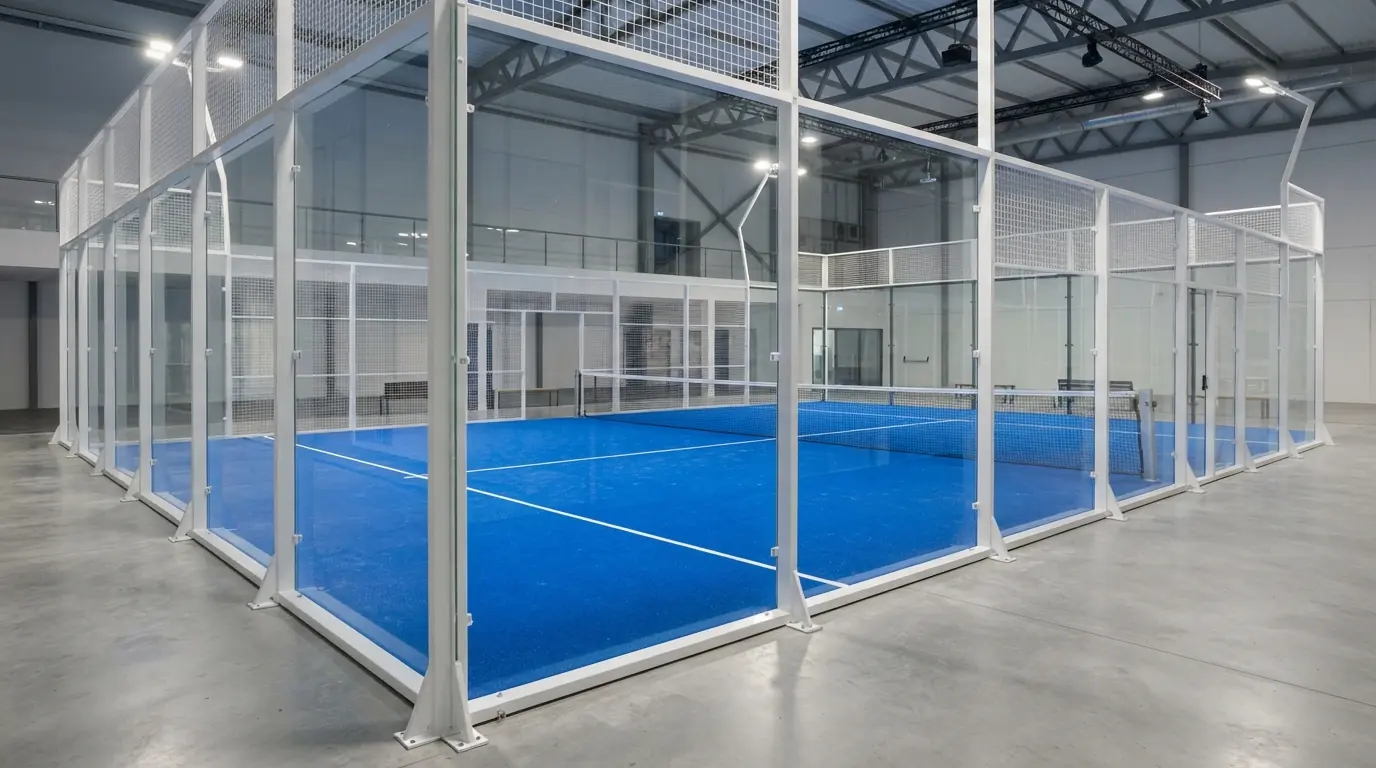
GLASS & MESH WALLS
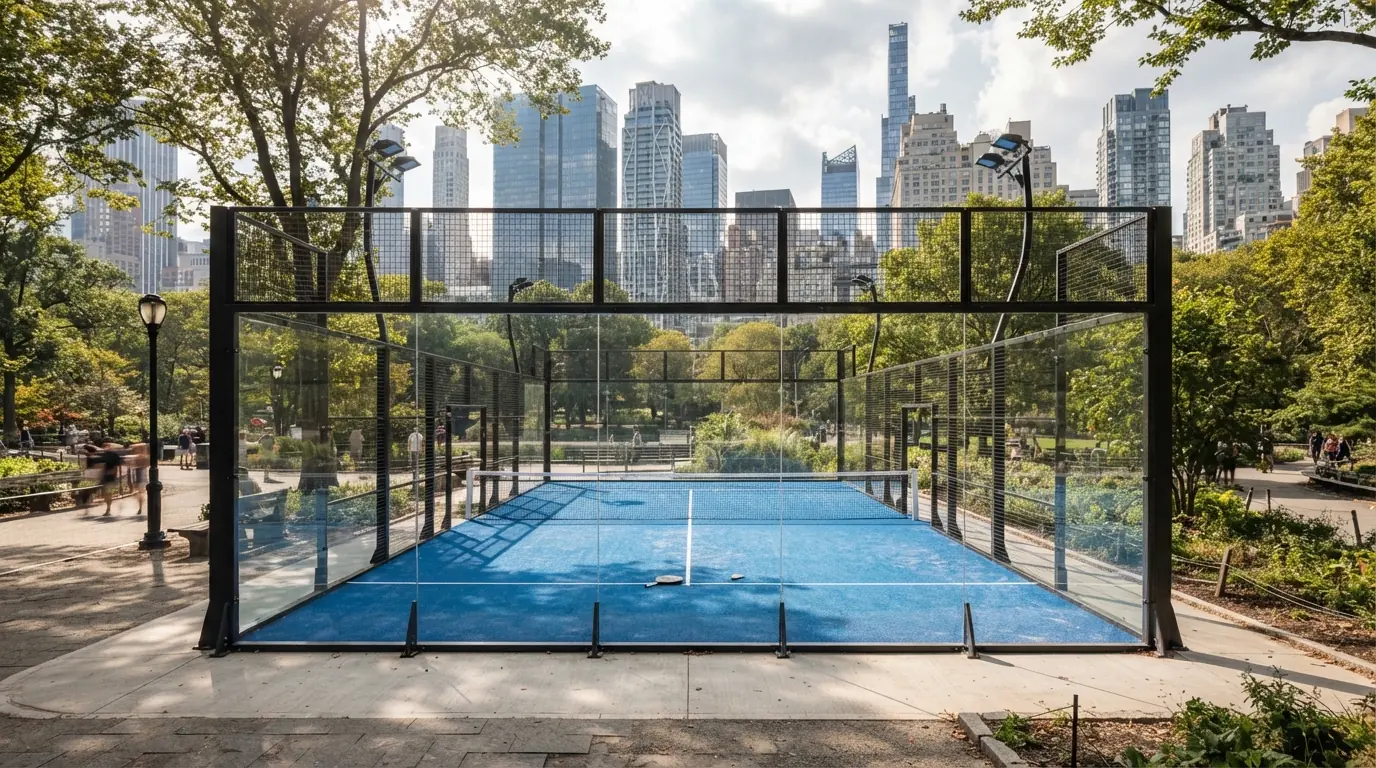
20M BY 10M
Court & Net Basics
A regulation padel court is 20 meters long by 10 meters wide, enclosed by walls that stay in live play — 3 meters of glass topped with 1 meter of mesh. The net sits lower than a tennis net: 0.88m high at the center, rising to 0.92m at the posts. A service line runs 6.95m from the net on each side, splitting each half into service boxes.
Serving Rules
The serve is always underarm, struck at or below hip height, with the ball bounced once on the ground before contact — there's no overhead serve in padel, unlike tennis. The serve must land diagonally in the opponent's service box, the same diagonal-serving logic as tennis and pickleball.
Padel's underarm-only serve rule surprises tennis players the most — there's no overhead serve to fall back on, at any level of the sport.
Scoring
Padel uses the same scoring structure as tennis: 15, 30, 40, game, with sets and matches built the same way. The 2026 FIP rules update added real flexibility at deuce (40-40): tournaments and clubs can now choose between the classic Advantage system, a new Star Point (a single decisive point with the receiver picking which side to return from), or the Golden Point (a single sudden-death point). Which option applies is set before the match, not chosen mid-game.
Using the Walls
This is padel's biggest structural difference from tennis: the glass and mesh walls are part of live play. Once the ball has bounced on the court, players can play it off the back or side walls before it bounces a second time — similar to squash. A ball is only out if it goes over the wall entirely or hits it before bouncing on the court first.
Continuous Play Rules
Padel keeps play moving: players get 25 seconds between points and 90 seconds during changeovers. Padel is also always played in doubles at the sanctioned level — there's no official singles format, which is one of the clearest differences from pickleball, where both singles and doubles are common. See our pickleball vs padel comparison for the rest of how the two sports actually differ.
Frequently Asked Questions
How big is a padel court?
A padel court is 20 meters by 10 meters, enclosed by walls — 3 meters of glass topped with 1 meter of mesh. The net stands 0.88m high at the center and rises to 0.92m at the posts.
Is padel always doubles?
Yes. Official FIP padel has no sanctioned singles format — every match is doubles, four players on court.
How is padel scored?
Padel uses tennis-style scoring: 15, 30, 40, game. At 40-40 (deuce), the 2026 FIP rules allow three options: classic Advantage, the new Star Point, or the Golden Point.
Can you hit the ball off the wall in padel?
Yes, but only after the ball has bounced once on the court first. Once it has bounced, players can play it off the back or side walls before it bounces a second time, similar to squash.
How do you serve in padel?
The serve is always underarm, struck at or below hip height, with the ball bounced on the ground once before contact. It must land diagonally in the opponent's service box.