Most paddle comparisons online reduce the choice to a one-line verdict: "carbon fiber is better." That's an oversimplification. Two paddles can both be labeled "carbon fiber" and play very differently, because the details that actually matter — weave density, core thickness, resin systems — vary a lot between models. This guide walks through the general engineering principles behind each material, based on published paddle-construction documentation and manufacturer data, not our own lab testing.
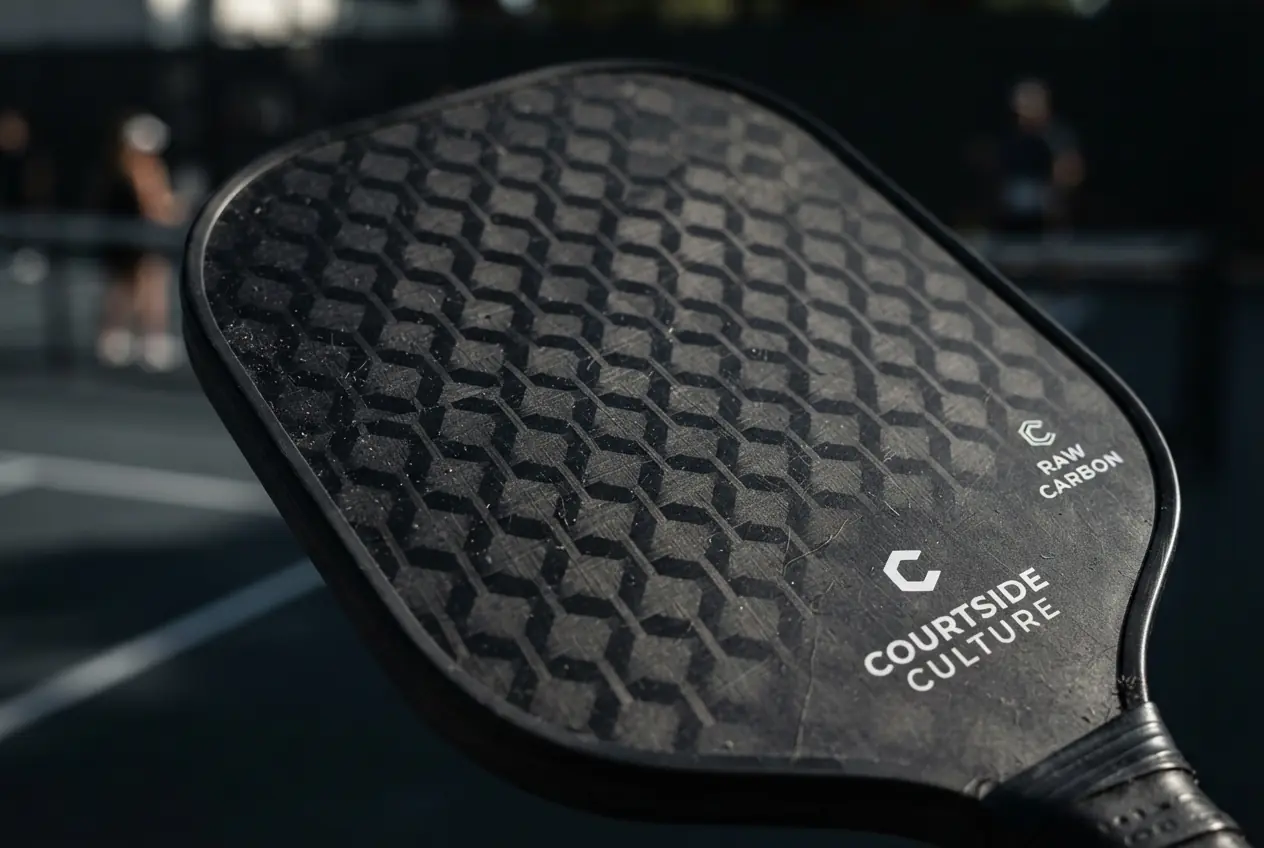
RAW CARBON WEAVE
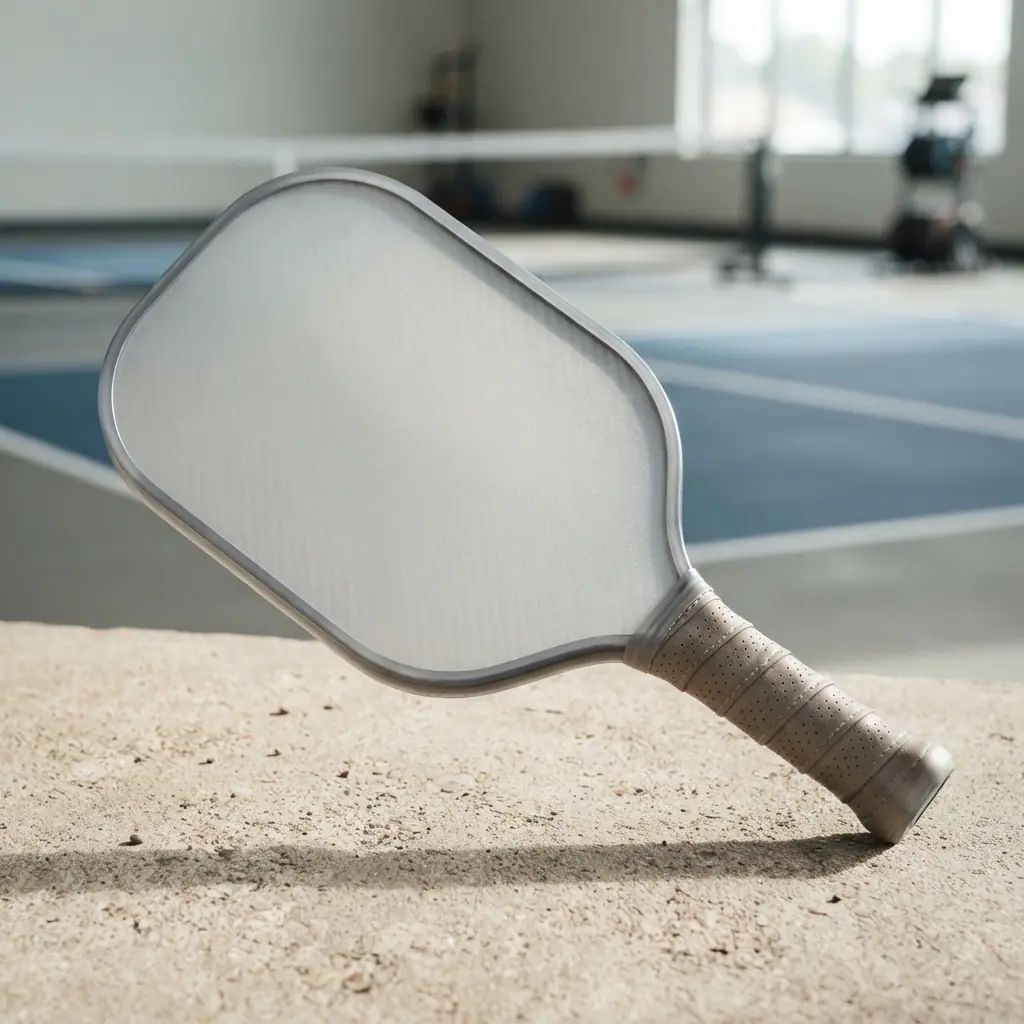
FIBERGLASS SURFACE
How Carbon Fiber Performs
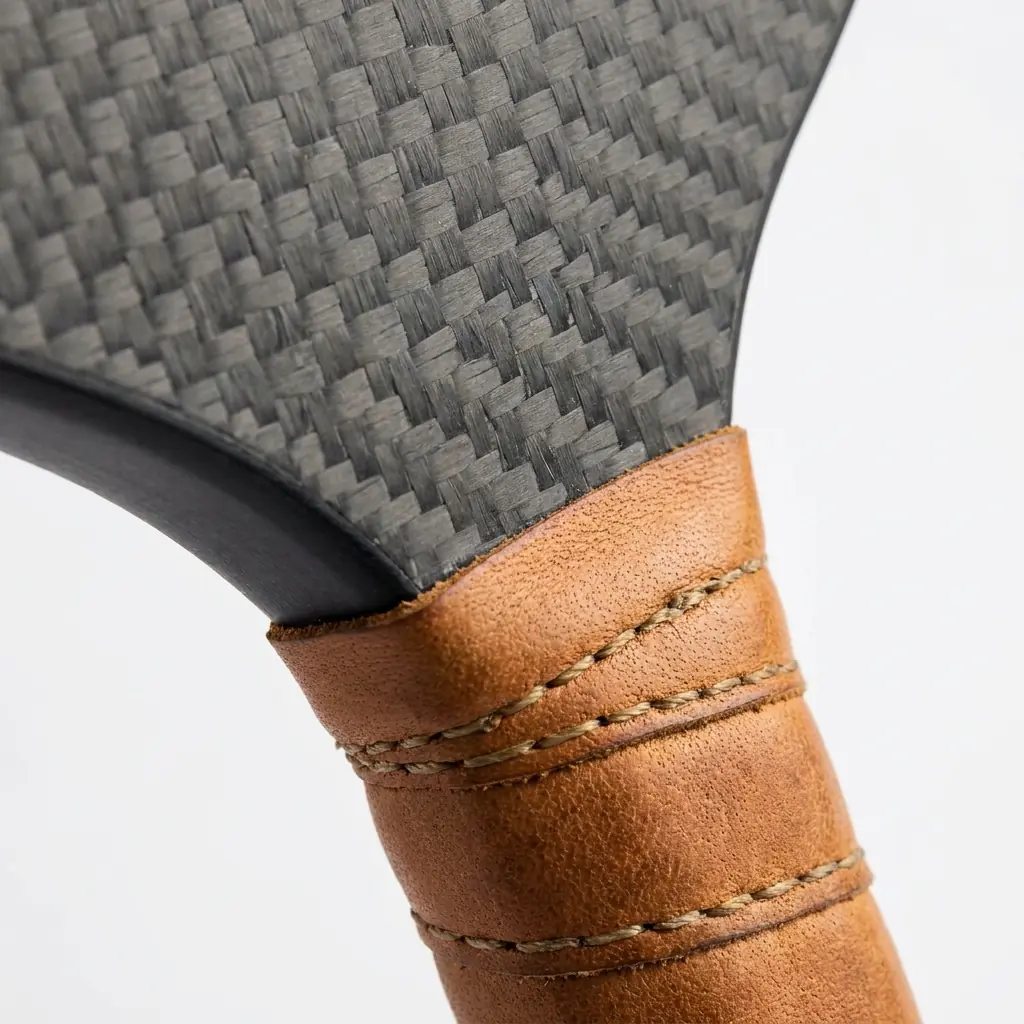
Carbon fiber paddle faces are built from woven filament sheets — often a raw, unpainted T700-grade weave — bonded to the core under heat and pressure. Weave density is a major factor in stiffness, and stiffness generally determines how a paddle transfers energy on contact. A stiffer face flexes less at impact, which tends to mean less energy lost to deformation and a more predictable, repeatable response.
That predictability is generally why stiffer carbon faces are associated with control over raw power: because the face doesn't flex and rebound the way a softer material does, the ball tends to come off more consistently, shot after shot. Players who prioritize touch, resets, and consistent placement over the kitchen line commonly gravitate toward carbon paddles for this reason.
Raw, unpainted carbon surfaces also tend to have a slightly rougher texture than a gel-coated finish, which several manufacturers and independent paddle reviewers cite as a factor in spin generation — the idea being that more surface friction grips the ball marginally longer on contact. This is part of why raw carbon faces have become common on tournament-oriented paddles over the past few seasons.
How Fiberglass Performs
Fiberglass faces work on the opposite principle. The material generally has more inherent flex, so on contact the face compresses slightly and rebounds — a trampoline-like effect that carbon fiber typically doesn't produce to the same degree. That extra flex is commonly cited as adding a small amount of energy return on top of the player's own swing, which is why fiberglass paddles are often associated with feeling more powerful for a similar swing effort.
This tends to be why power-focused hitters often prefer fiberglass: if your game leans on driving through the ball rather than placing it precisely, that added flex can work in your favor. The commonly cited tradeoff is durability — the same flex that adds pop is also associated with faster fatigue over time compared to a stiffer carbon face, particularly with high-volume outdoor play on abrasive surfaces. Fiberglass paddles also tend to sit at a noticeably lower price point than premium carbon models, which matters for anyone still deciding how much to invest in the sport.
ProLite Rebel PowerSpin 2.0
~$110–160Reactive fiberglass face, 14mm PolyCore honeycomb
The Core Matters As Much As the Face
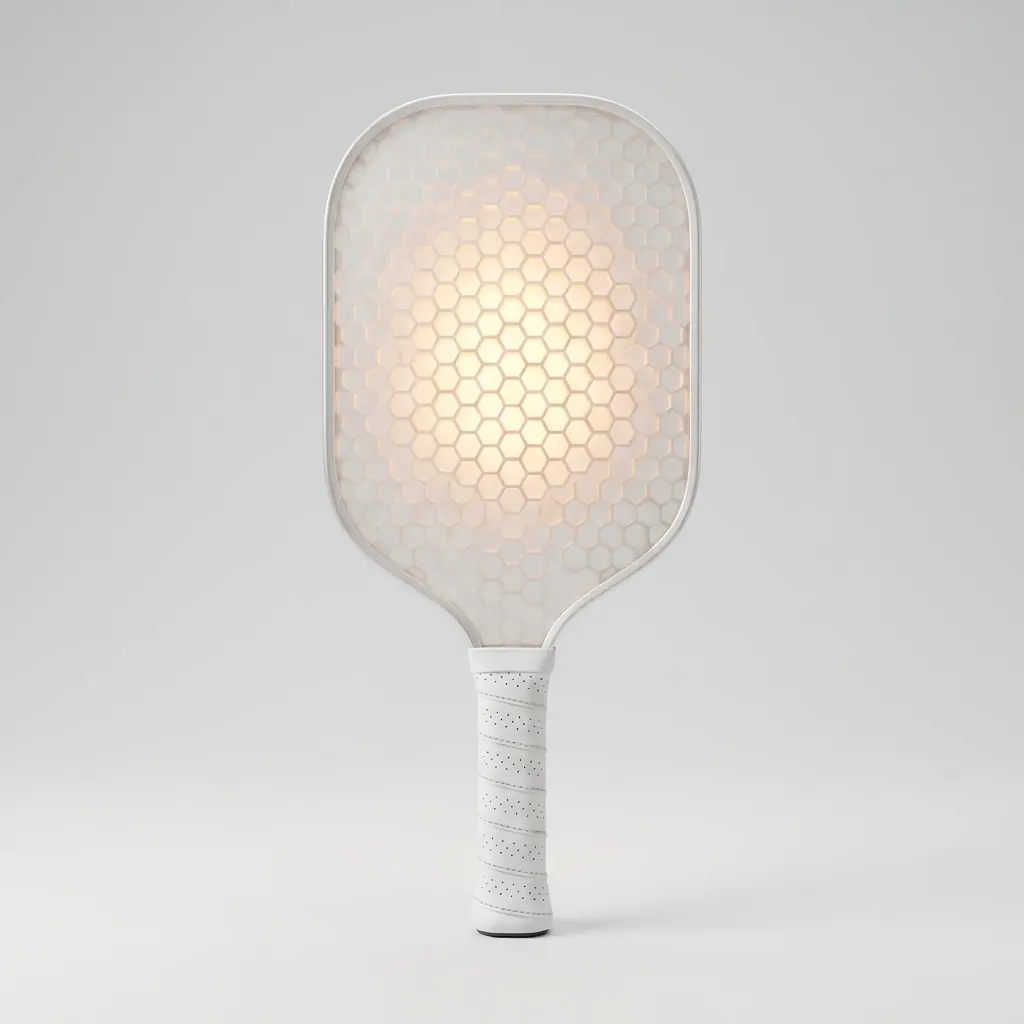
It's easy to reduce the buying decision to "carbon vs. fiberglass," but the polymer honeycomb core underneath the face does just as much work. Core density affects how firm or muted the paddle feels on contact, and core thickness is generally understood to affect dwell time — how long the ball stays in contact with the face before leaving it.
Thicker cores (16mm and above) are generally associated with slightly longer dwell time, which is commonly cited as giving more control over dinks and resets. Thinner cores (13–14mm) tend to feel more responsive and "poppier," which fits players who want the ball off the face quickly. Core density also affects the sound of contact — denser cores tend to produce a duller thud, looser-cell cores a sharper pop — which many players use as an unconscious feedback signal, even if they couldn't describe why.
It's also worth noting that face material and core thickness don't always align with the stereotype. Some carbon-faced paddles ship with thin, power-oriented cores, and some fiberglass paddles ship with thick, control-oriented cores. The material alone doesn't tell the whole story — check the full spec sheet, not just the face material.
Which to Choose
Treat the following as general tendencies, not hard rules — there are exceptions in both directions:
- Control-focused players who live at the kitchen line and prioritize placement over pace tend to prefer stiffer, carbon-faced paddles.
- Power-focused players who rely on drives tend to prefer the added flex of fiberglass.
- Beginners are commonly steered toward fiberglass paddles, partly for the larger margin for error on a mis-timed swing, and partly because fiberglass paddles tend to be more affordable while you're still developing your swing.
- More advanced players often migrate toward carbon over time, as a more consistent swing lets them take advantage of the control a stiffer face offers.
Paddle stiffness is also worth a mention for anyone managing arm or elbow discomfort: very stiff faces are generally understood to transmit more shock into the wrist and elbow on off-center hits. This is one reason some players who deal with tennis-elbow-style strain opt for a softer fiberglass face, or a carbon paddle paired with a thicker, more dampened core. This is general information, not medical advice — talk to a physical therapist or doctor if joint pain is a recurring issue.
The material choice isn't really carbon vs. fiberglass — it's how much flex, dwell time and feedback matches the way you actually hit the ball.
Paddles Worth Considering
Three paddles that illustrate the range described above, based on published specs and publicly available owner feedback rather than our own hands-on testing:
JOOLA Ben Johns Perseus CFS 16mm
$160–230Raw T700 carbon fiber face, 16mm core — a carbon-forward, control-oriented pick
ProLite Rebel PowerSpin 2.0
~$110–160Reactive fiberglass face, 14mm core — a fiberglass-forward, budget-friendly pick
Selkirk Vanguard Power Air Invikta
~$250Hybrid carbon/fiberglass face, 13mm core — a blended pick for players who don't want to choose a side
Conclusion
There's no universal "best" material — only the material and core combination that fits your swing, your skill level, and how your joints respond to impact. For more paddle-by-paddle comparisons, see our paddle hub and our full Selkirk Vanguard Power Air Invikta breakdown.