Most of what actually improves a pickleball game is repetition, not equipment. But a handful of genuinely useful training tools can make solo practice possible when you don't have a partner, or sharpen one specific weakness faster than open play alone would. Here are five real options worth knowing about.
Rebounder Nets for Solo Practice
A rebounder net returns the ball to you after every hit, which is what makes it the single most useful tool on this list for a player without a regular practice partner. Most models fold flat for storage and set up in a driveway, garage or backyard in a few minutes.
MerryMove Pickleball Practice Rebounder Net
~$69.99–99.992-in-1 rebounder and 6ft mini net, adjustable bungee tension, flexible fiberglass poles
Training Paddles
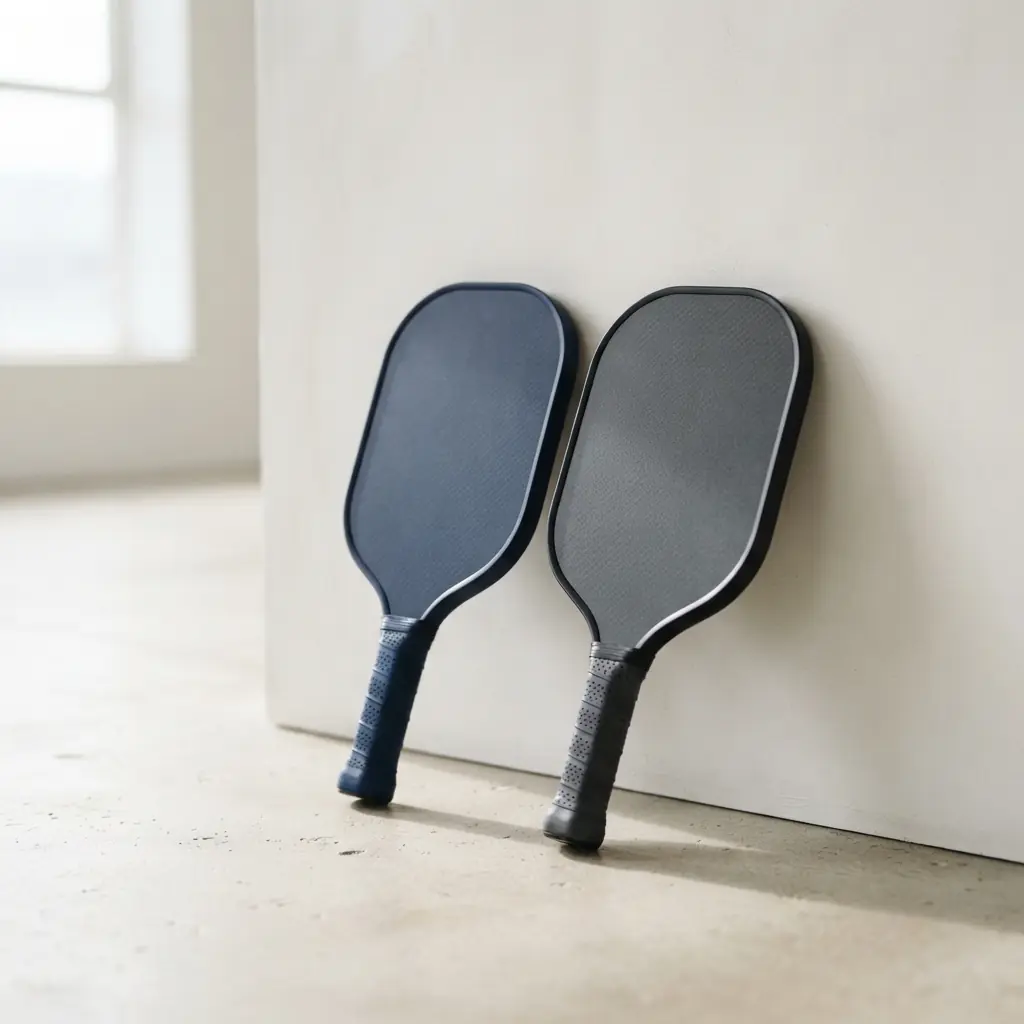
A training paddle intentionally shrinks the sweet spot, which sounds counterproductive until you actually use one: it exaggerates off-center contact so you feel every mishit immediately, rather than getting away with sloppy technique the way a full-size, forgiving paddle lets you. Franklin's version keeps the 16mm core and rough weight of a real paddle, just with a smaller head and a longer handle built specifically for repetition drills.
Franklin Sports Sweet Spot Training Paddle
$59.9916mm core, mini paddle head with extra-long handle, built for swing and contact training
A rebounder net and a training paddle solve two different problems — one gives you reps without a partner, the other makes the reps you already get count for more.
Ball Retrieval
This is the least exciting item on this list and arguably the most practical: if drilling means bending over to pick up a ball every 10 seconds, you'll do less of it. A retrieval tube lets you roll along the fence line and scoop balls up in seconds between sets.
Franklin Sports Pickleball Retriever Tube
~$25–5012-ball capacity, adjustable shoulder strap, lightweight collection tube
Footwork & Accuracy
A dink accuracy pad gives you a physical target to aim for when working on soft-game placement — genuinely useful since dinking is more about repeatable placement than power, and a pad makes bad placement obvious in a way hitting into open space doesn't. An agility ladder isn't pickleball-specific equipment at all — it's a generic multi-sport speed and footwork tool — but the split-step and lateral-shuffle patterns it drills map directly onto the movement pickleball actually demands.
Spalding Dink Pad Pickleball Training Aid
~$30–40Portable accuracy target board for dink and shot-placement practice
ProsourceFit Speed Agility Ladder
~$20–28Adjustable-length footwork ladder for lateral movement and split-step drills
What Actually Improves Your Game
None of this replaces time against a real opponent — reading an actual paddle angle and reacting to an unpredictable shot is a different skill than repeating a drilled motion against a net. Think of these as ways to get more out of the practice time you already have, not a shortcut around it. If you're newer to the sport, our beginner gear guide covers what to prioritize first, and our third shot drop and dinking strategy guides are worth pairing with the drills above.