Building a backyard or driveway pickleball court usually comes down to one practical question after the net is sorted: how do you actually mark 240-plus feet of straight, regulation lines without a professional court painter? Tape is the answer most home-court builders land on, since it's fast, reversible, and doesn't require repainting a shared driveway. This guide compares four tape-based marking kits by coverage and durability.
Full Spec Comparison
| Model | Length | Adhesive | Best For | Typical Price |
|---|---|---|---|---|
| VloEssic Portable Court Tape | 2in x 230ft | Outdoor/indoor rated | One full court in a single roll | ~$25 |
| TRINKA Court Marking Kit | 2 rolls + storage bag | Outdoor/indoor rated | Complete kit with carry bag | ~$25 |
| Court Line Boundary Tape | 2in x 200ft | Low-adhesion masking-style | Surfaces that can't take strong adhesive | ~$22 |
| PATIKIL Multi-Sport Court Tape | 2in x 66ft (2-pack) | General outdoor/indoor | Touch-ups, multi-sport driveways | ~$16 |
Prices and coverage are pulled from manufacturer and retailer listings at the time of writing. Confirm current length and price on the retailer page before buying — court tape length varies by pack.
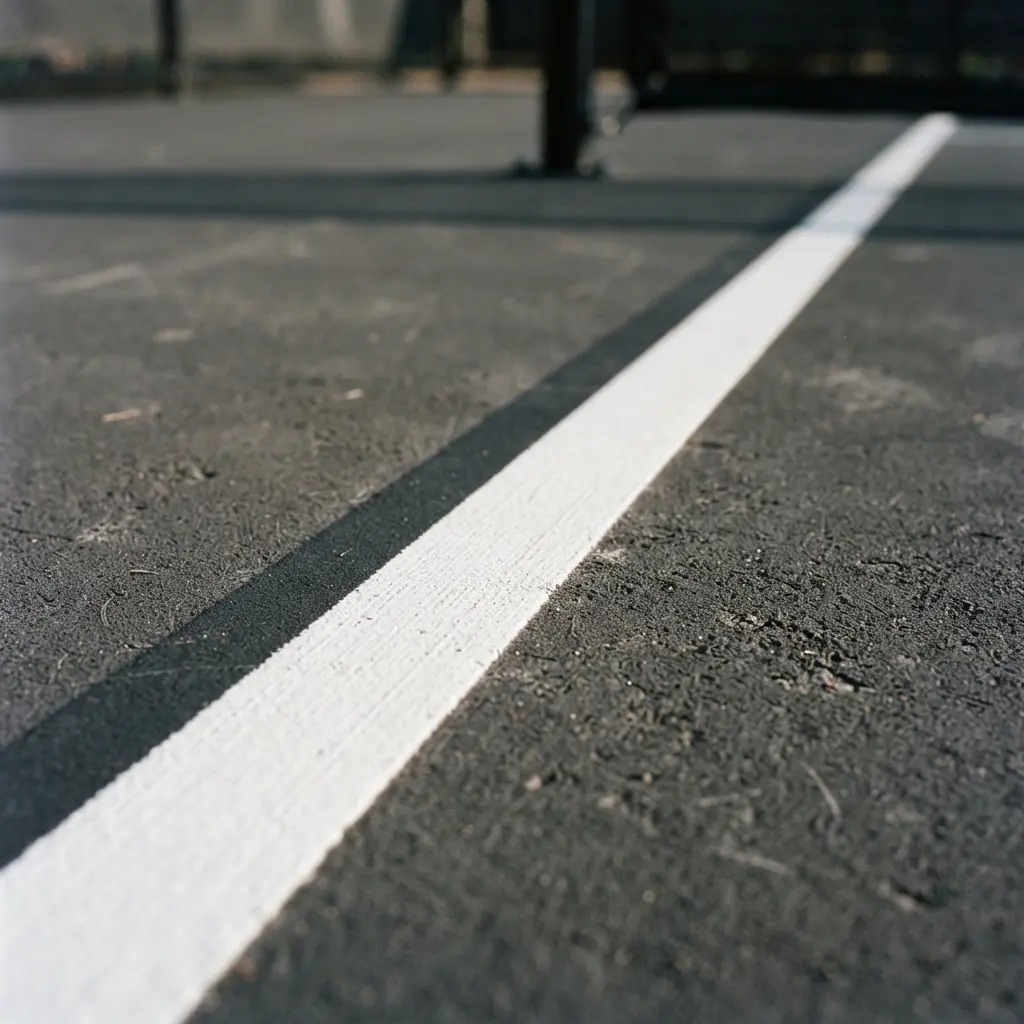
2-INCH REGULATION WIDTH
CHALK FIRST, TAPE SECOND
What to Look For in Court Marking Tape
Coverage length is the first filter. A full regulation layout — both baselines, both sidelines, the net line, the two non-volley zone lines and the centerlines on each side — adds up to roughly 240 linear feet of 2-inch tape. A single 200–230-foot roll gets you close to a full court in one pass; shorter multi-packs are built more for touch-ups or partial layouts than a complete first-time install. See our court dimensions guide for the exact layout to chalk out first.
Adhesive strength matters as much as tape width. Standard outdoor tape holds well on asphalt and sealed concrete, but a painted or sensitive surface can peel or discolor under a strong adhesive — that's the specific case a low-adhesion, masking-style tape is built for. Whichever you choose, chalk the full layout first using real measurements, then lay tape along the chalk lines; taping freehand onto an unmarked surface is the most common reason DIY court lines come out crooked.
The Comparison
1. VloEssic Portable Court Tape (~$25)
At 230 feet in a single roll, VloEssic's tape is long enough to cover a full court's line layout without piecing together multiple rolls, which is the main practical advantage over shorter multi-packs. It's rated for both indoor and outdoor use and works across pickleball, badminton, tennis and basketball court layouts on the same driveway or gym floor.
VloEssic Portable Court Tape
~$25230ft roll, indoor/outdoor rated, multi-sport width
2. TRINKA Court Marking Kit (~$25)
TRINKA's kit ships as two tape rolls plus a drawstring storage bag, aimed at players who want a complete, put-it-away-between-uses solution rather than a bare roll of tape. The two-roll format also gives some flexibility to remark the kitchen line separately from the outer boundary if one wears out faster than the other.
3. Court Line Boundary Tape (~$22)
This is a 200-foot roll built around a lower-adhesion, masking-style backing specifically for surfaces that can't take a strong adhesive without peeling paint or leaving residue — a real concern on a painted garage floor or a driveway sealant that's still curing. It's a narrower use case than the general-purpose options above, but the right call if surface damage is your main worry.
4. PATIKIL Multi-Sport Court Tape (~$16)
PATIKIL's tape ships as a shorter two-pack rather than one long roll, which makes it a reasonable budget entry point for touch-ups on an existing layout or a smaller partial court, but it's not enough length on its own for a full first-time install without buying multiples.
Chalk the layout with real measurements first — the tape is just there to make lines you already know are correct permanent-looking.
Verdict
For a first-time full court install, the VloEssic 230ft roll or the TRINKA two-roll kit are the more practical choices, since either gets you through the entire line layout without buying multiple packs. Reach for the Court Line boundary tape specifically if you're taping over a painted or sensitive surface that can't handle a strong adhesive. And the PATIKIL multi-pack makes sense as a touch-up buy once your original lines start wearing, or for a smaller, partial layout. Pair whichever tape you choose with our court dimensions and backyard guide for the exact measurements to chalk first, and see our net guide for the other half of a home court setup.
Frequently Asked Questions
How much court tape do I need for one full pickleball court?
A regulation court's full line layout — boundaries, centerline, non-volley zone and service lines — adds up to roughly 240 linear feet of 2-inch tape. A single 200–230-foot roll gets you close to a full court; shorter rolls are meant for touch-ups or partial layouts rather than a complete court.
Should I use tape or paint for a backyard pickleball court?
Tape is the lower-commitment, fully reversible option — good if you're not certain the court is staying in that spot long-term, or if you're marking a shared driveway that needs to go back to normal use. Paint is more permanent and typically more durable outdoors over a full season, but it's a one-way decision.
Will pickleball court tape survive outdoors all season?
Outdoor-rated tape is built to handle sun and rain better than basic indoor gym tape, but any tape will wear faster on a driveway that also sees car and foot traffic than on a dedicated court. Most kits are realistically a few months of daily play before edges start lifting and need reapplying.
Do I need to chalk the court before taping it?
It's the recommended order: mark your boundary and key lines with chalk first using the court's actual dimensions, then lay tape along the chalk lines. Taping freehand without a chalked reference first is the most common reason DIY court lines come out uneven.