The right ball for your court matters more than most new players expect — the wrong hole pattern changes bounce, spin and durability in ways that are easy to blame on your paddle instead. This is a ranked buying list; for the underlying mechanics of why indoor and outdoor balls differ, see our full indoor vs outdoor explainer.
OUTDOOR FLIGHT
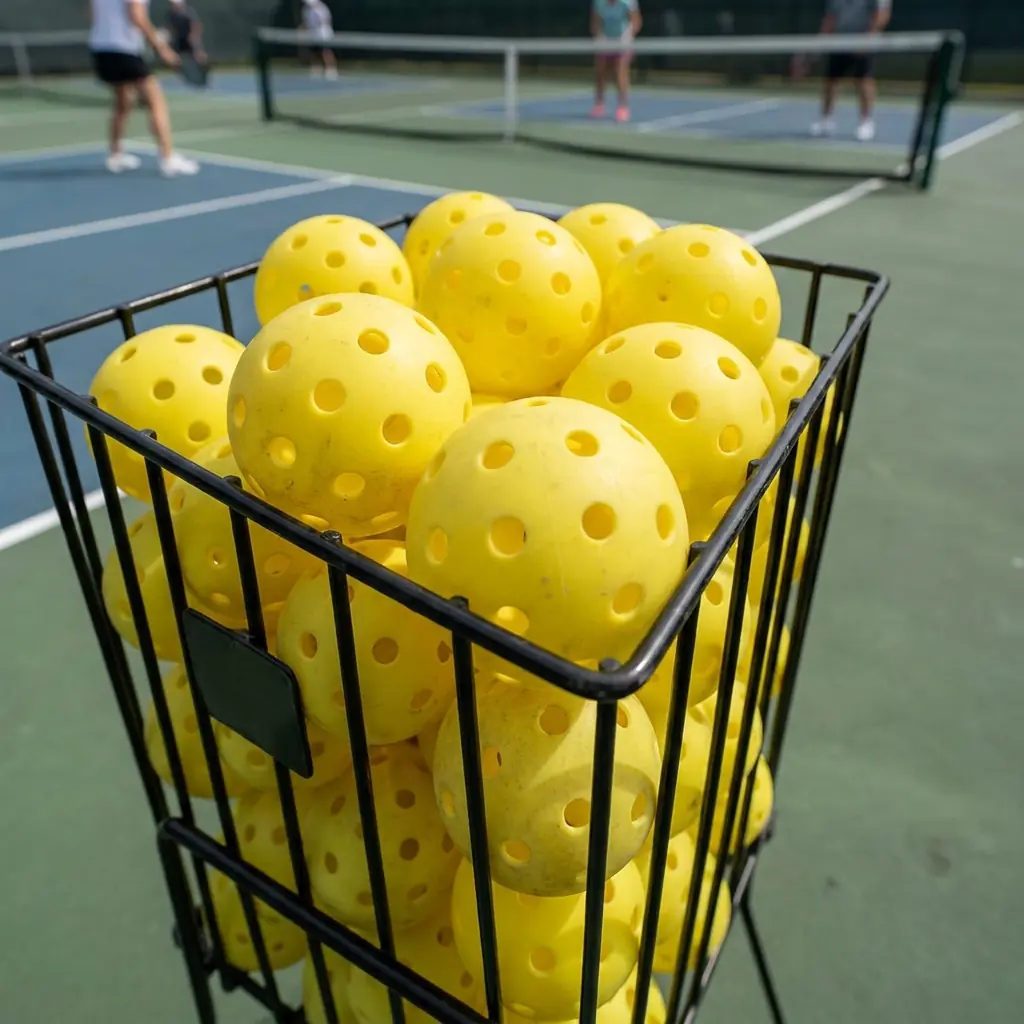
LOWER COST PER BALL
Indoor vs Outdoor, Quickly
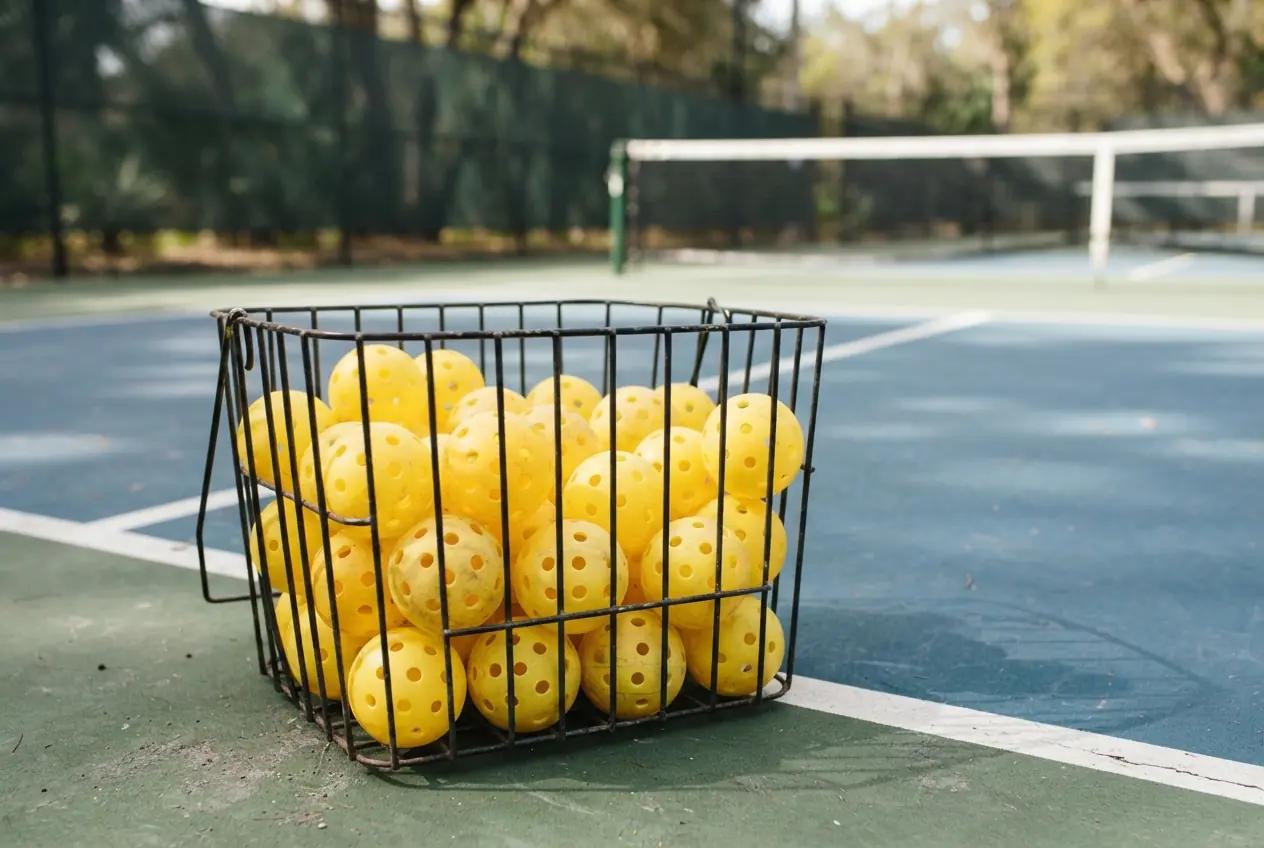
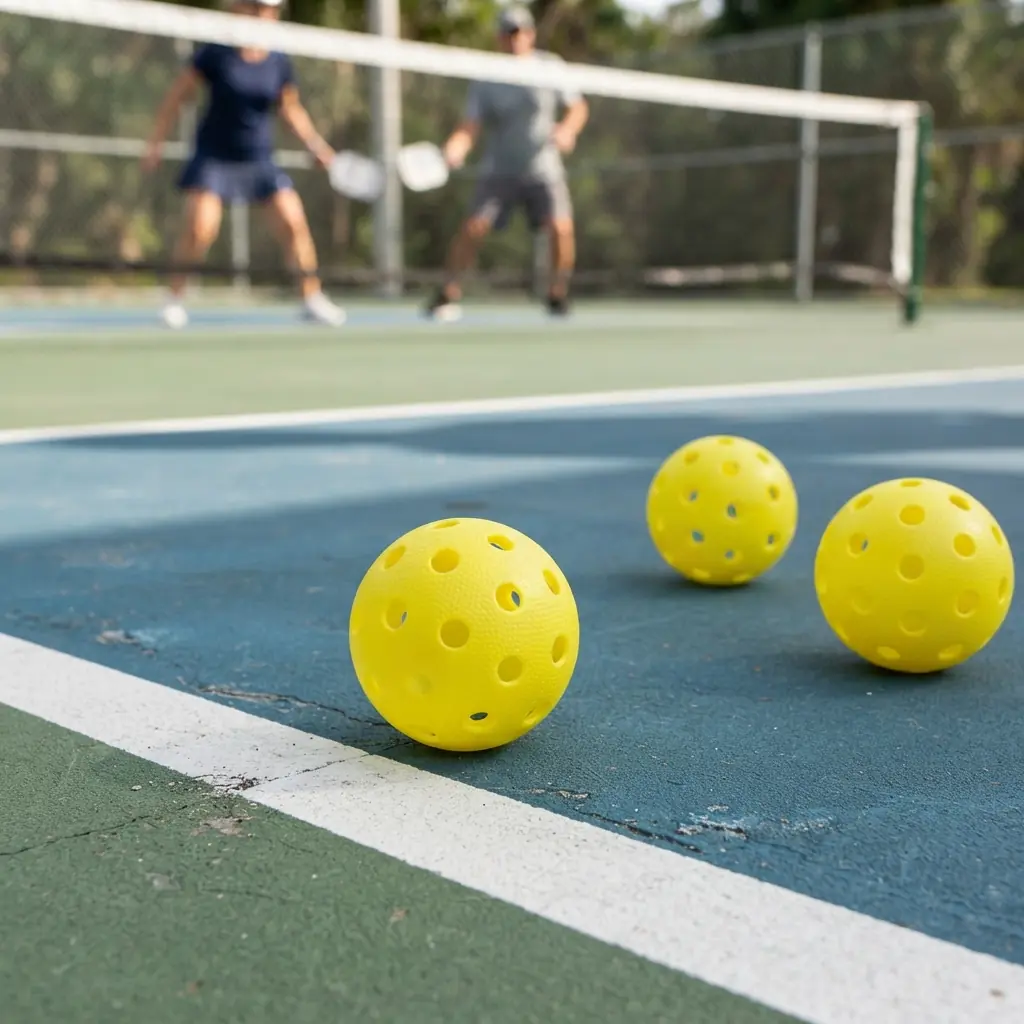
Outdoor balls use a 40-hole pattern and a harder plastic shell built to cut through wind and survive rough asphalt or concrete surfaces. Indoor balls use a softer plastic and a 26-hole pattern, built for smooth gym floors without wind to fight through. Using an indoor ball outside tends to crack quickly on rough surfaces; using an outdoor ball indoors plays too fast and bounces unpredictably off a smooth floor.
Five Balls Worth Buying
Franklin X-40 Outdoor — ~$12–20
The official ball of the US Open Pickleball Championships and the ball most rec centers and outdoor tournaments default to. If you only buy one ball on this list, this is the safe, correct choice for outdoor play.
Franklin X-40 Outdoor Balls
~$12–2040-hole outdoor pattern, official ball of the US Open
Onix Pure 2 Outdoor — ~$9–12 per 3-pack
A long-standing, widely used alternative to the X-40, popular for consistent flight and durability on hard outdoor surfaces. A reasonable choice if you want a second outdoor option to compare against the Franklin.
Onix Pure 2 Outdoor Balls
~$9–12 (3-pack)40-hole outdoor pattern, consistent flight and durability
Franklin X-40 Indoor — ~$12–20
The indoor counterpart to the outdoor X-40: a 26-hole pattern and softer plastic built for gym floors, and used as an official ball on multiple indoor tournament circuits.
Franklin X-40 Indoor Balls
~$12–2026-hole indoor pattern, softer plastic for gym floors
Onix Fuse Indoor — ~$13 per 3-pack
Similar specs to the Franklin X-40 Indoor, but plays slightly slower — a real, specific advantage for longer dink-heavy doubles rallies where a slower ball gives everyone more time to react.
Onix Fuse Indoor Balls
~$13 (3-pack)26-hole indoor pattern, softer feel for slower rallies
Dura Fast 40 Outdoor — ~$10–15 per dozen
A long-running, USA Pickleball-approved outdoor tournament ball and one of the most widely used balls in outdoor club play, historically. Worth knowing: it is not the current official US Open ball — that's the Franklin X-40 above — but it remains a legitimate, sanctioned option worth having in your bag.
Dura Fast 40 Outdoor Balls
~$10–15 (dozen)USA Pickleball-approved outdoor tournament ball
Using an indoor ball outdoors, or the reverse, is one of the most common gear mistakes in the sport — and it's an easy, cheap one to fix.
Comparison Table
| Ball | Surface | Notable | Price |
|---|---|---|---|
| Franklin X-40 Outdoor | Outdoor | Official US Open ball | ~$12–20 |
| Onix Pure 2 Outdoor | Outdoor | Consistent, durable | ~$9–12 (3-pack) |
| Franklin X-40 Indoor | Indoor | Indoor tournament circuits | ~$12–20 |
| Onix Fuse Indoor | Indoor | Slower, good for long dink rallies | ~$13 (3-pack) |
| Dura Fast 40 Outdoor | Outdoor | USAPA-approved, widely used in club play | ~$10–15 (dozen) |
Prices pulled from manufacturer and retailer listings at the time of writing and vary by pack size and promotion — confirm current price before buying.
Verdict
Match the ball to your court first: Franklin X-40 Outdoor for outdoor play, Franklin X-40 Indoor for indoor gyms, full stop, if you want the simplest correct answer. From there, the Onix and Dura Fast options are worth having as a second choice to compare feel against. Buy in bulk — a dozen or more — the moment you're playing weekly; balls crack and get lost in bushes more often than any other piece of gear. For the mechanics behind why hole pattern and hardness matter this much, see our full indoor vs outdoor explainer.