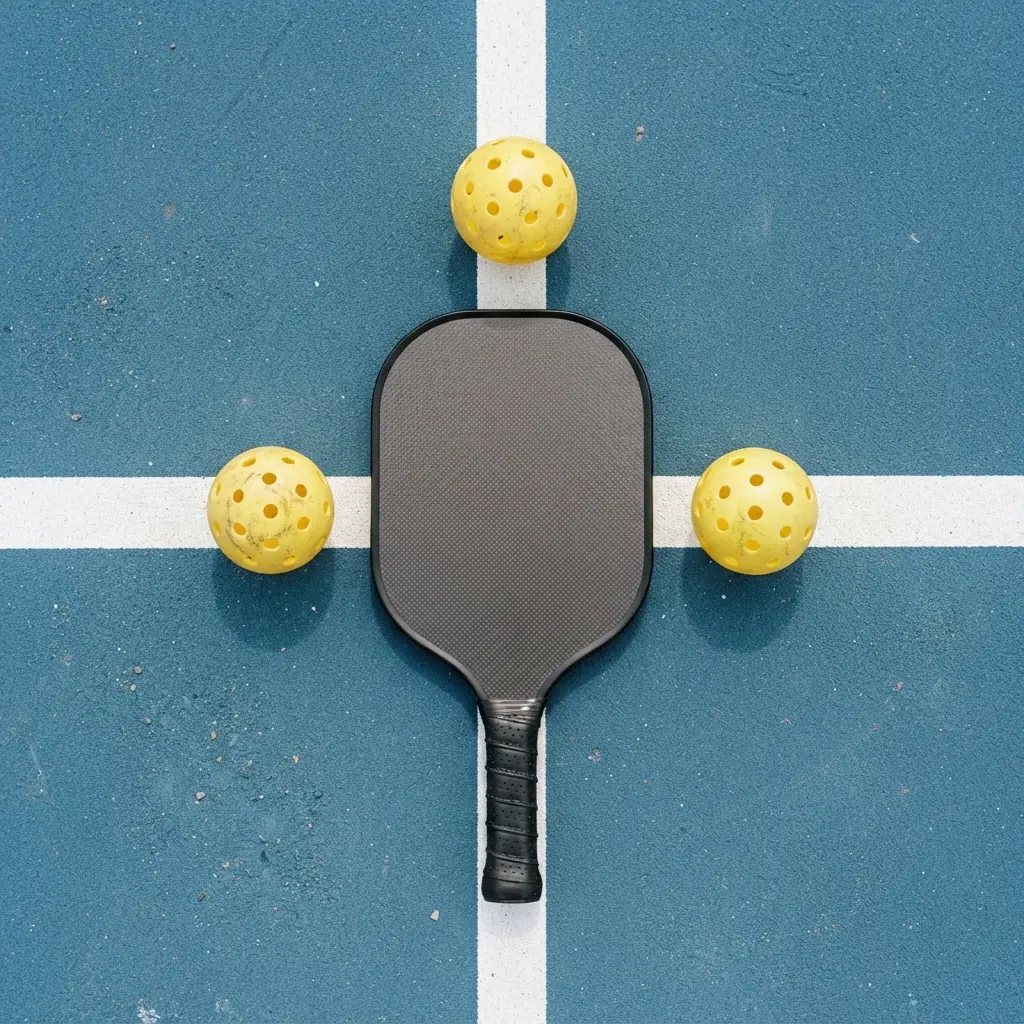
New players often grab whatever pickleball is on sale and assume a ball is a ball. It isn't. Indoor and outdoor pickleballs are built to different specifications for a reason, and using the wrong one changes how the ball bounces, flies, and how long it lasts.
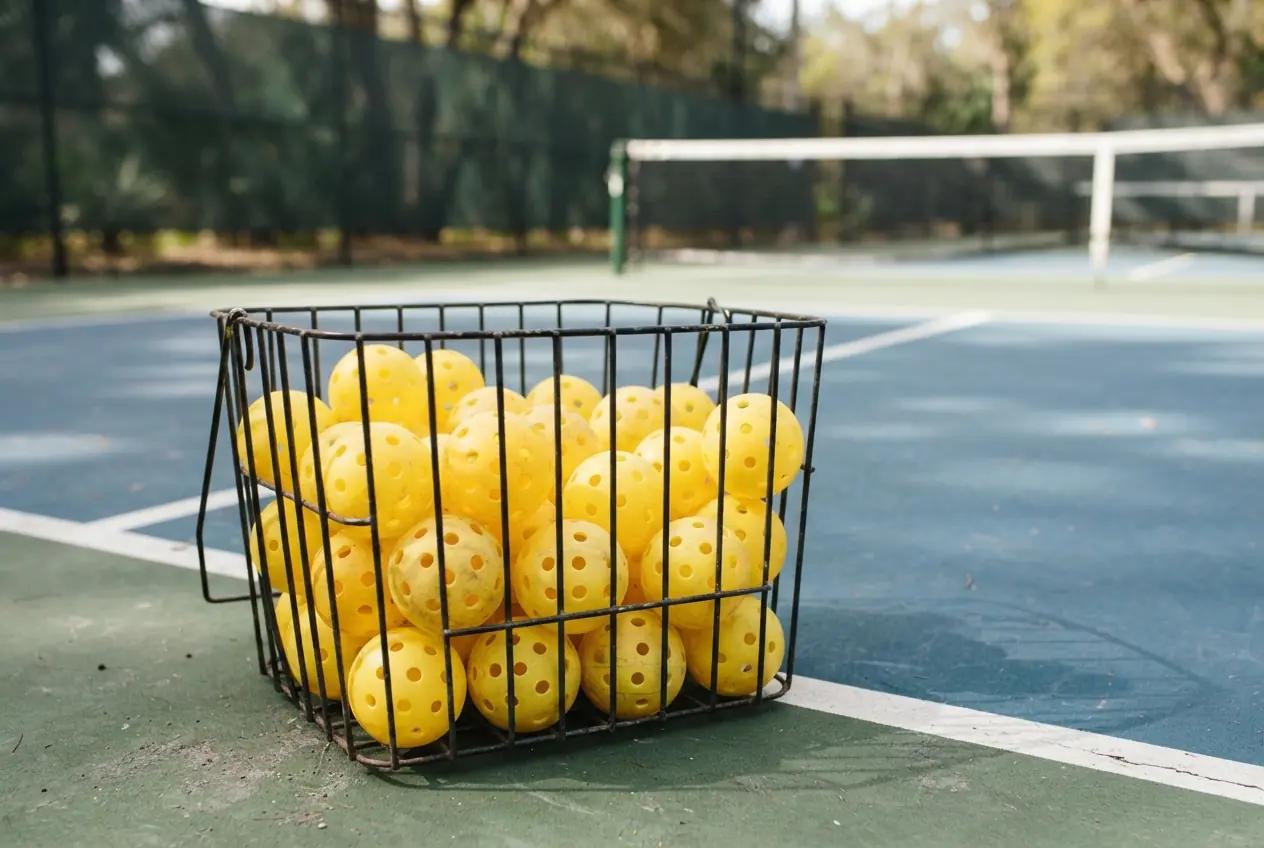
40-HOLE PATTERN
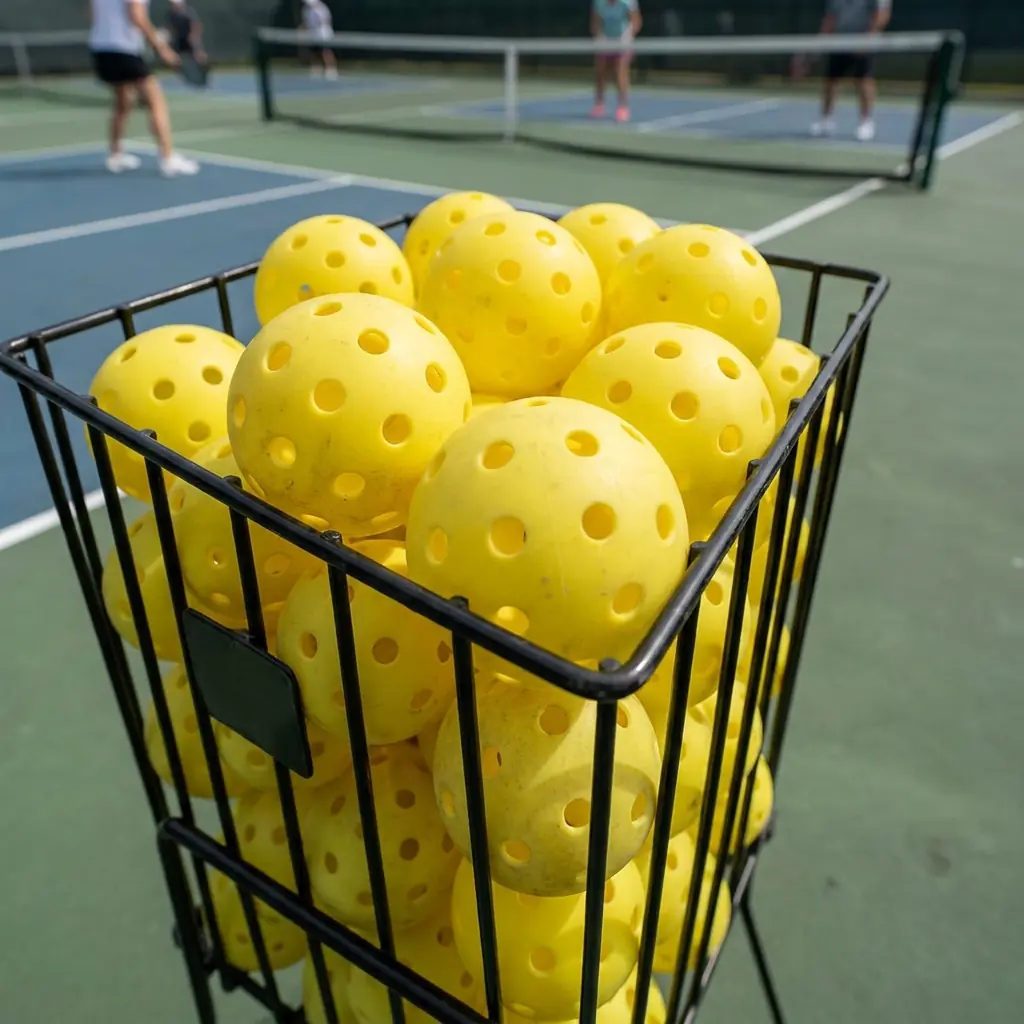
SOFTER CONSTRUCTION
Why Indoor and Outdoor Balls Differ
The core difference comes down to two things: hole pattern and plastic hardness. Outdoor courts are exposed to wind, temperature swings, and abrasive surfaces like asphalt or textured acrylic. Indoor courts are typically climate-controlled, smoother, and wind-free. A ball built for one environment behaves poorly in the other — an outdoor ball on an indoor gym floor tends to feel dead and under-bounce, while an indoor ball used outside is more prone to cracking and gets pushed around by wind.
Outdoor Balls
Outdoor pickleballs generally use a harder plastic and a pattern of many small holes — commonly 40 — engineered to resist wind drift and hold up on rough surfaces. The Franklin X-40 is a widely referenced standard here: it's the official ball of the US Open Pickleball Championships and carries USA Pickleball approval for tournament play, with a one-piece, seamless construction intended to resist denting and cracking on outdoor courts.
Franklin X-40 Outdoor Balls
~$12–2040-hole outdoor pattern, official ball of the US Open, USA Pickleball approved
Indoor Balls
Indoor balls typically use a softer plastic and fewer, larger holes, since there's no wind to fight and gym floors are smoother than asphalt or textured outdoor courts. The Onix Fuse is a commonly recommended indoor option: a USA Pickleball–approved update to Onix's earlier Pure 2 ball, built with reinforced seam welding for durability and a lower bounce profile tuned for smooth indoor surfaces like hardwood or polished concrete.
Onix Fuse Indoor Balls
~$10–15Softer construction, larger hole pattern, tuned for smooth indoor courts
Does Hole Count Matter?
Hole count and placement affect two things directly: aerodynamics and spin. More holes generally mean more surface disruption, which helps an outdoor ball resist wind drift but also creates more opportunity for spin to grip. Fewer, larger holes on indoor balls trade some of that wind resistance (which isn't needed indoors) for a more predictable, lower flight path on a calmer surface. Neither pattern is objectively better — they're solving for different environments.
The wrong ball doesn't just feel off — it changes how the ball bounces, how far it carries, and how fast it wears out.
Our Picks
If you only play outdoors, a sleeve of Franklin X-40s is the safest, most widely stocked choice and doubles as tournament-legal equipment if you ever enter a sanctioned event. If you only play indoors, the Onix Fuse is a reasonable default. If you split time between both, it's worth keeping a small stock of each rather than using one ball type everywhere — see our beginner gear guide for how balls fit into a first-time setup.
Checking Ball Quality Before You Play
Balls degrade with use, and a cracked or out-of-round ball changes bounce in ways that are easy to blame on your own play instead of the equipment. A simple visual check before a session: hold the ball up to light and look for hairline cracks around the holes, which is usually the first place a ball fails. A ball that's gone slightly oval instead of round will wobble in flight rather than bounce true — roll it across a flat table and watch for an uneven wobble as a quick test. Outdoor balls exposed to hot pavement or direct sun for extended periods also tend to go brittle faster than the same ball stored indoors between sessions.
Color is worth a brief mention too: optic yellow is the de facto standard for both indoor and outdoor balls because of how well it stands out against most court surfaces and backgrounds, though orange and other high-visibility colors are also USA Pickleball–approved and sometimes preferred for contrast against a specific court color or lighting condition.
Quick Answers
Can I use an outdoor ball indoors?
You can, but it will generally feel dead and bounce lower than an indoor ball on the same surface, since it's built for a harder, more abrasive environment.
Can I use an indoor ball outdoors?
You can for casual play, but it's more likely to crack or deform faster outdoors, and wind will affect its flight more than an outdoor-specific ball.
How many holes does a tournament-legal outdoor ball have?
40 holes is the common standard among USA Pickleball–approved outdoor balls, including the Franklin X-40.
For the rest of what belongs in a starter kit, browse our accessories hub or the full beginner's guide.