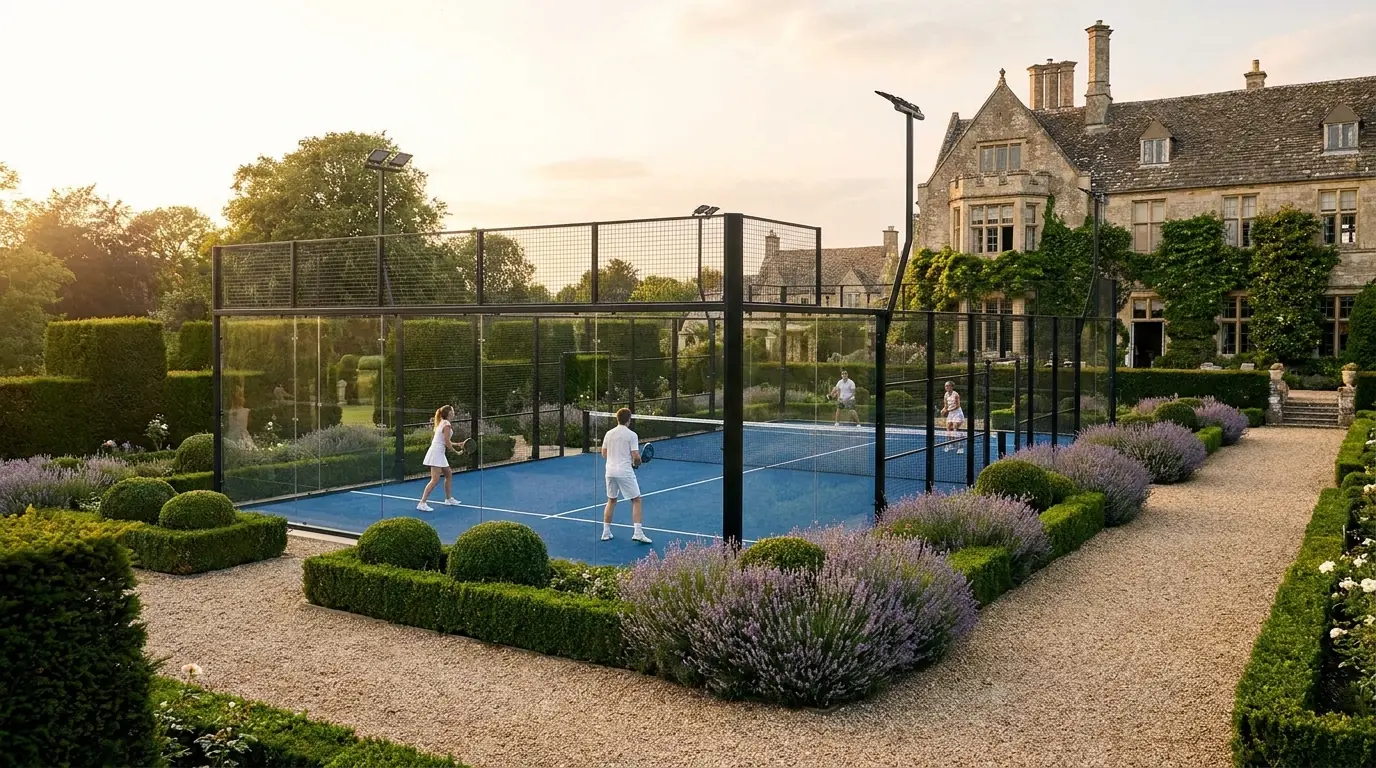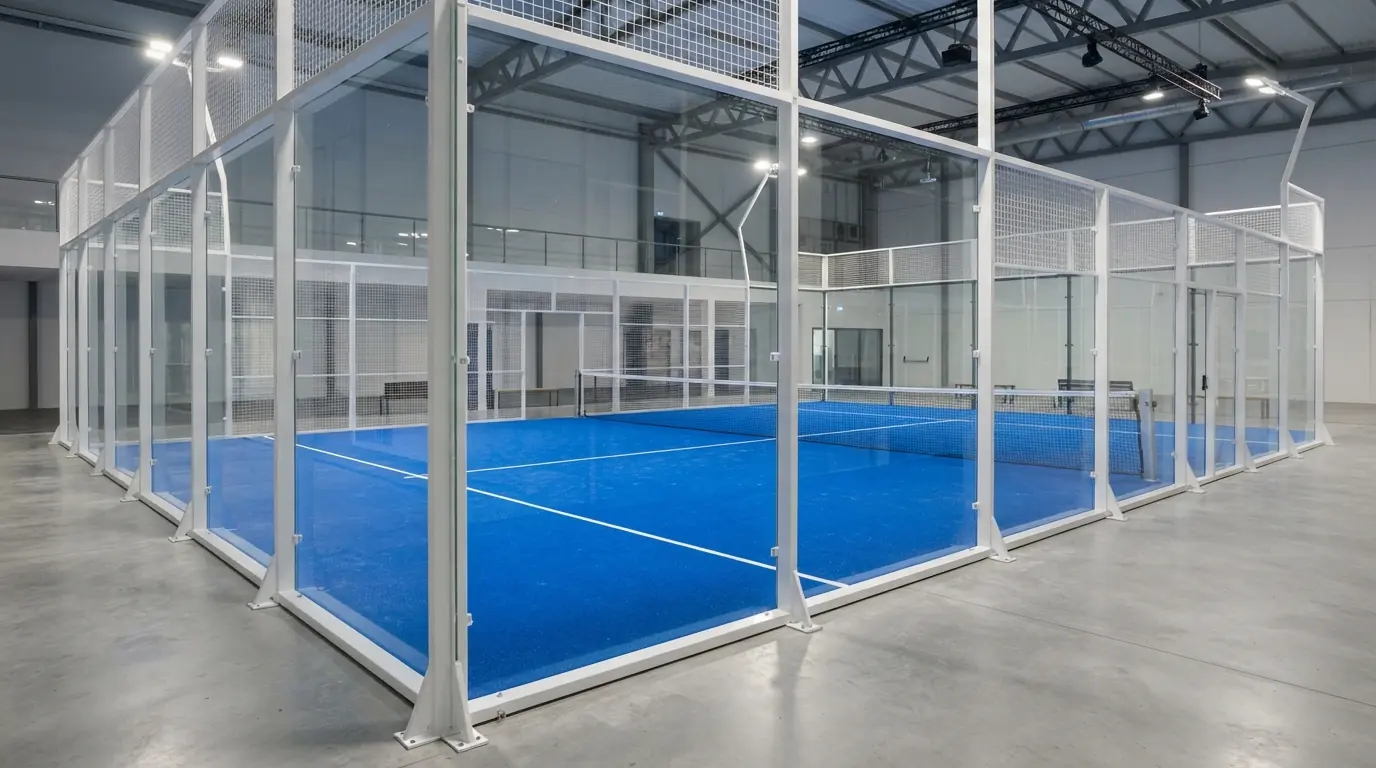
Padel's walls are what make it padel — they're also what makes building a court a dramatically bigger project than the backyard sport-court builds most players are used to. Here's what a regulation court actually requires, and what a real build costs.
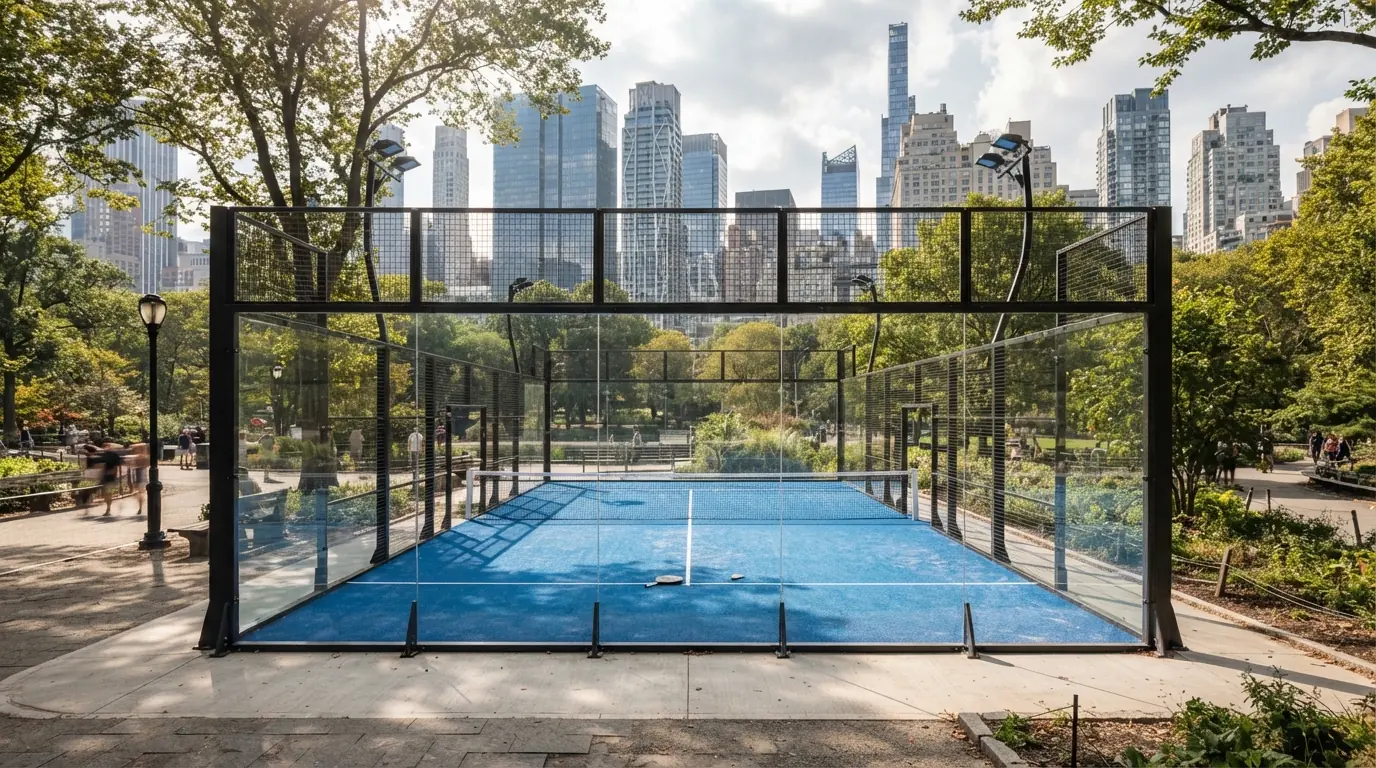
20M BY 10M
GLASS & STEEL, NOT DECORATION
Official Court Dimensions
A regulation padel court is 20 meters long by 10 meters wide. The net sits lower than a tennis net: 0.88m high at the center, rising to 0.92m at the posts, with a service line running 6.95m from the net on each side — the same figures covered in our padel rules explainer.
The Walls: Glass, Mesh & Why They Matter
The walls are structural, load-bearing parts of the court, not decoration — the ball can be volleyed off them after it bounces on the court, so they have to survive thousands of hard strikes a year. Regulation courts run 3 meters of tempered glass at the side walls, with the back wall reaching a taller 4-meter enclosure once topped with a meter of mesh fencing. Pro-level builds typically use 12mm-thick tempered safety glass on an engineered steel frame — nothing close to standard residential glazing.
What It Actually Costs to Build
A single court structure — the glass, steel frame and net — typically runs $35,000–$50,000. A fully finished, installed facility, once site work, drainage, foundation, and lighting are included, runs $85,000–$120,000 or more. The glass-and-steel enclosure is usually the single largest line item, often 40–60% of the total build, since it's engineered to be part of the playing field, not just a fence around it. LED sports lighting, if included, typically adds another 15–25% to the total project cost, and an indoor build adds real structural building costs on top of the court itself.
A padel court's walls aren't decoration — they're structural, load-bearing parts of the court that have to survive thousands of ball strikes a year, which is why the glass enclosure eats more of the budget than the court surface itself.
The Playing Surface
Padel uses specialized artificial turf, not the acrylic or asphalt surfacing common on tennis and pickleball courts. Materials and installation typically run $5,000–$25,000 for the surface alone, with padel-specific turf priced around $8–15 per square meter installed. The turf itself differs from generic artificial grass in pile height (roughly 10–20mm), density, and a silica sand infill system, all tuned for a pressurized rubber ball rather than a hard plastic one.
Is a Home Padel Court Realistic?
For most players, no — not in the way a backyard pickleball court is realistic. Our pickleball backyard court guide covers a project that's considerably smaller in both footprint and cost; padel's engineered glass enclosure puts a regulation build in a different category entirely, closer to a small commercial sports facility than a DIY backyard project. Unless you're building for a serious multi-family property, HOA amenity, or small club investment, joining an existing club is the far more practical way to play regularly — see our guide to where to play padel in the US for how to find one.
If a home or club court is genuinely in your future, stock it once it's built:
Dunlop Pro Padel Balls — 24-Can Case
~$130 (24 cans / 72 balls)FIP-approved, tournament-quality ball, lower cost per can in bulk
Frequently Asked Questions
How big is a padel court?
20 meters by 10 meters (65.6 by 32.8 feet), enclosed by glass and mesh walls that stay in play.
How much does it cost to build a padel court?
A single court structure typically runs $35,000–$50,000. A fully finished, installed facility — including site work, drainage and lighting — runs $85,000–$120,000 or more.
Can you build a padel court in a backyard?
Technically yes, if the lot is large enough for the 20m x 10m court plus surrounding clearance, but the engineered glass-and-steel wall enclosure makes it a far bigger project than a backyard pickleball court, both in footprint and cost.
What surface do padel courts use?
Padel-specific artificial turf, with a shorter pile height (10–20mm) and silica sand infill, built for a pressurized rubber ball rather than a hard plastic one.